originally posted on 11/15/2019
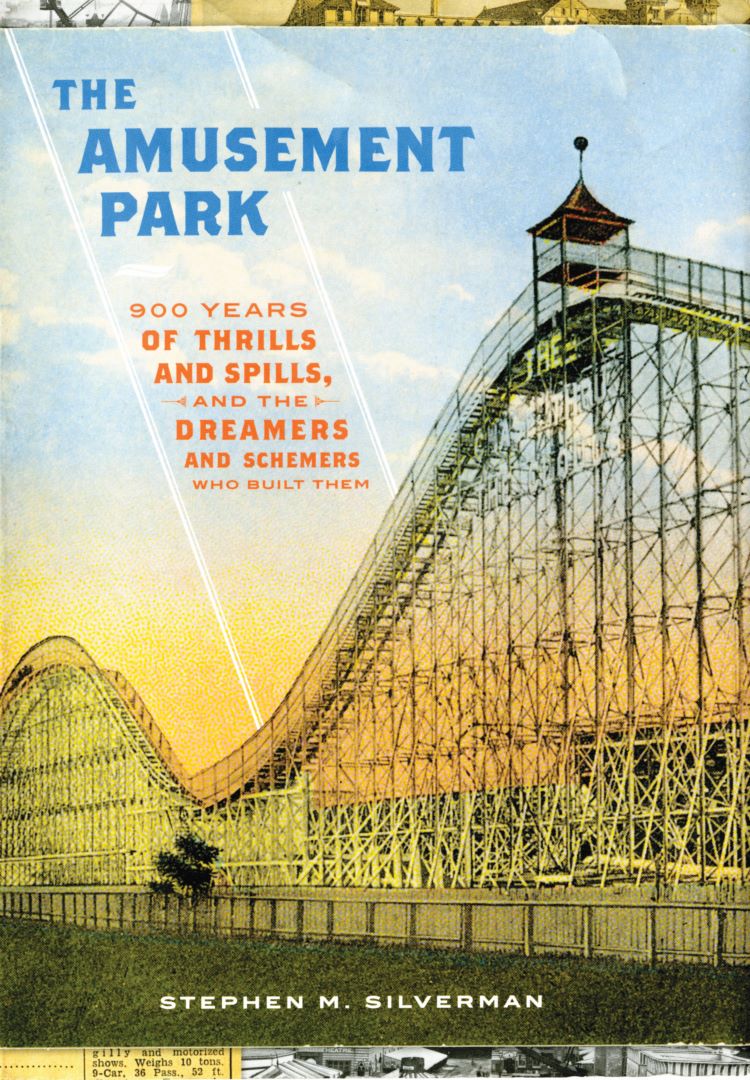
The Amusement Park: 900 Years of Thrills and Spills, and the Dreamers and Schemers Who Built Them, by Stephen M. Silverman.
View full-sized image.
The Amusement Park: 900 Years of Thrills and Spills, and the Dreamers and Schemers Who Built Them, by Stephen M. Silverman. New York: Black Dog & Leventhal, 2019, 432 pages.
By and large, ACE members are among the most knowledgeable people about roller coasters, and indirectly about amusement parks. Every now and then, it is a good thing for fans to be taken down a peg or two and be enlightened that no one knows everything. There is an entire history to the passion and hobby enthusiasts adore. In the case of Stephen Silverman’s new book, The Amusement Park, there are centuries of it.
To say a lot of research went into this book is an understatement. There are 72 pages of research annotations and acknowledgments, out of the book’s 432 pages. Silverman (an ACE member, in fact) has already authored a dozen books. This time around, he turns to the subject of amusement parks.
The book begins by going all the way back to 1133 A.D. and the Bartholomew Fair. The roots to festivals, circuses and any fair can most likely be traced here. These occasions eventually gave rise to pleasure gardens, indulgent desserts, observations wheels and live productions called “spectaculars.”
Within this tapestry of history, Tivoli Gardens is spotlighted.
Coney Island and its influence are vividly portrayed. Thompson’s Switchback Railway, Elephantine Colossus, the Looff carousel (Coney’s first ride) and the birth of the hot dog are laid out for the reader to experience what the early years of this famed location might have been like.
Organizers behind the 1893 Columbian Exposition in Chicago, after outbidding New York, knew something iconic had to set the event apart. George Washington Ferris’ 250-foot diameter wheel was just such an icon.
The birth of the boardwalk took place in Atlantic City, as did saltwater taffy. Silverman takes the reader on an amazing journey through this and numerous pinpoints in time and does so with such an incredible grasp of vocabulary that it is easy to become impressed.
Parks of the last century — Elitch’s, Lakeside, Ponchartrain Beach, Hersheypark, Dorney Park, Riverview, Rockaway Playland and dozens of others — have their roots retold. As do rides. The roots of the roller coaster’s birth, as well as rides such as Shoot the Chutes, are detailed. Also discussed are historic rides such as the Mauch Chunk Railway and several notable coasters of the past 100 years.
To say all the information took place before the reader’s time in this hobby would cut the book short. Its final chapters look at the powerful impact of Walt Disney (and the birth of the E-ticket!), the near-departure and reemergence of Cedar Point, and the introduction of the regional theme park with Six Flags — all familiar to today’s enthusiast. Whether it’s California’s coast or New Jersey’s, there will be familiar territory, as well as parks that were lost along the way.
There’s no telling how much time Silverman invested in researching the book, it is so vast. People with a passing interest in amusement parks will find it an interesting read. Those who are passionate will agree it is a treasure trove of amazing information. ACE members and enthusiasts everywhere can applaud the author for assembling such a body of work. While it does have a time-centered flow, Silverman didn’t become a slave to chronology. Like a good coaster, it sometimes goes and comes back.
The unassuming title should not be permitted to throw anyone off. As the holiday season is upon shoppers everywhere, The Amusement Park would be a great fit for ACE members.
— Tim Baldwin
ACE News Editor
@#$%&!
#ACENews