originally posted on 6/12/2020 11:29:10 AM
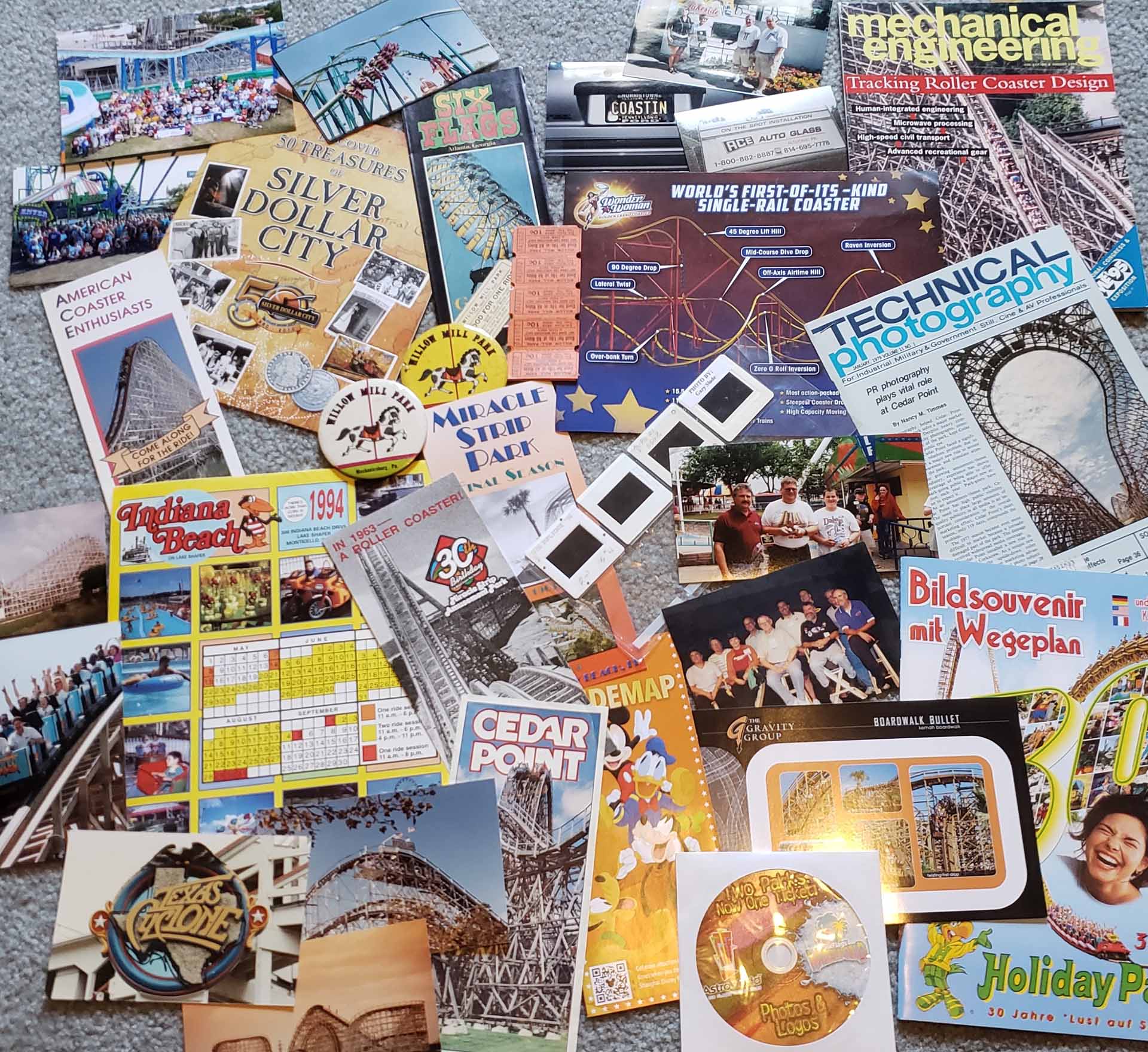
Photo: Tim Baldwin. View full-sized image.
In addition to taking lots of photos, many ACEers collect coaster- and park-related things, which, after an event, may get thrown into old shoeboxes or stuffed into drawers or file folders. This may work as a temporary solution, but what are the best ways to store these mementos to prevent damage and deterioration?
The following is adapted and updated from a flyer that was created for an ACE Archives open house many years ago. It is a general summary that includes the major categories of collecting for coaster and amusement park enthusiasts. The recommendations that follow don’t cover all conservation issues, however.
At the end of the article is a list of websites that provide guidance in more detail and links to suppliers of archival products. It’s never too late to begin taking care of your collections!
What You Should Avoid (the Bad Stuff)
- Storing collections in areas with too much light (ultraviolet, fluorescent), moisture (humidity) and heat
- Airborne pollutants (ozone, car exhaust)
- Critters (bugs, rodents)
- Photo albums that have self-stick adhesive with a clear plastic cover
- Plastics made from polyvinylchloride (PVC)
- Stacking or overstuffing boxes or folders
- Storing boxes on the floor or near food sources
- White glue, rubber cement, hot glue, self-stick tapes
- Pens (few exceptions)
- Metal clips, staples, pins and rubber bands
- Dirt, body oils, perspiration
- Lamination
- Wood or acid-based paper storage containers (e.g., most cardboard boxes)
What You Should Use (the Good Stuff)
- Acid- and lignin-free storage containers, albums and papers
- Cotton gloves to protect materials from oils and dirt
- Clean, dark, dry places for storage with good air circulation, temperature between 40˚ and 75˚ F and relative humidity below 65 percent (avoid hot attics and damp basements and garages)
- Plastic sleeves or sheets made from uncoated pure polyethylene, polypropylene or polyester (odor free)
- Photo corners made from acid-free paper or stable plastic films such as polyester, polypropylene or polyethylene.
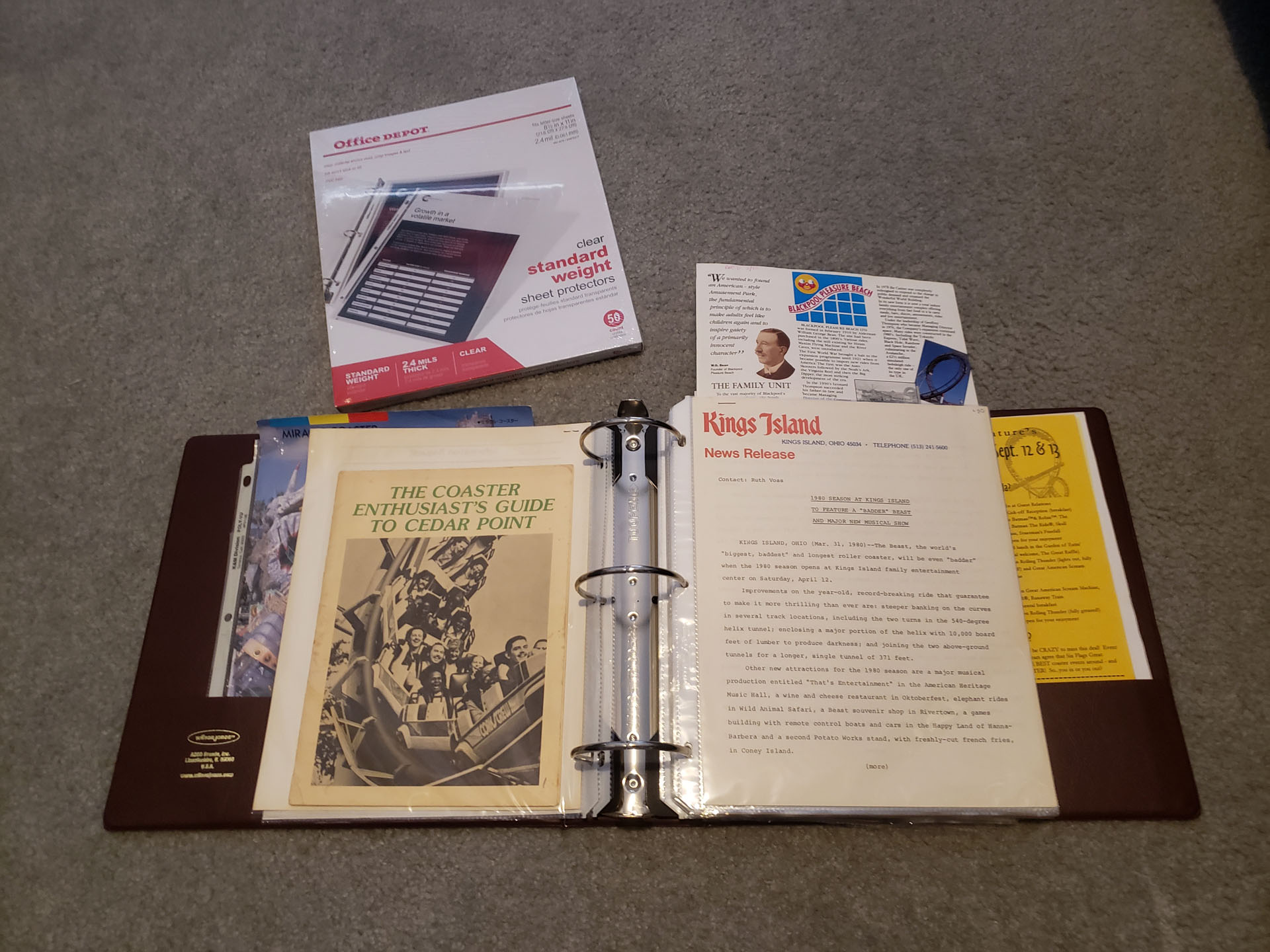
Transparent plastic sheets can save documents and souvenirs in a three ring binder. Items can be organized by park or chronologically. This gives the owner quick visual access while protecting the artifacts during viewing and storage.
Photo: Tim Baldwin. View full-sized image.
Here are some guidelines to help preserve all the great stuff you’ve saved . . .
Paper Products
- Store documents unfolded and unrolled, if possible (fold lines eventually will tear). Separate acidic documents (e.g., newsprint) with sheets of acid-free paper. If rolling onto tubes, use an acid-free tube.
- Store documents in acid-free folders, polyethylene or polypropylene sleeves or polyester sheets. Store these in appropriately sized acid- and lignin-free boxes with covers to block the light.
- Store scrapbooks flat in boxes on shelves so that dirt won’t get in and nothing will fall out.
- Remove staples, paper clips, rubber bands and any metal fasteners.
- Don’t use any kind of tape to repair torn or damaged documents.
- Limit handling of documents to avoid damaging them; wear cotton gloves.
- Make a photocopy on acid-free paper of newspaper and magazine clippings when the information is what’s important and not the clipping itself.
- Use a soft (#2) pencil to write the date on documents if it’s not there already.
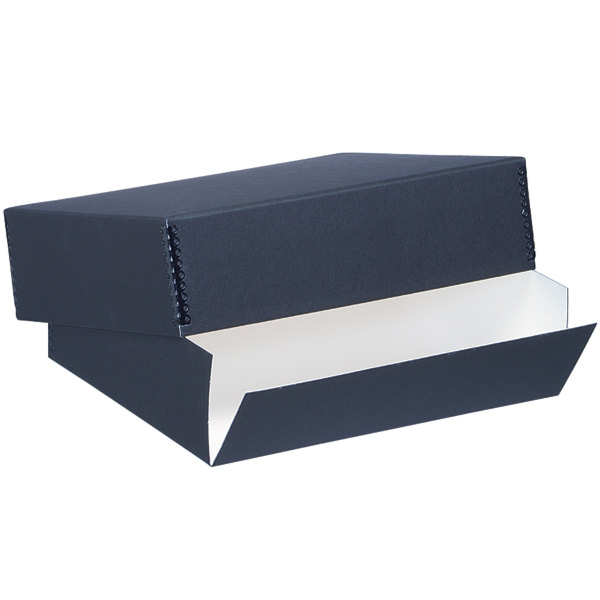
This drop-front box is ideal for the storage of prints, photos, art and similar mounted or unmounted documents that are best stored flat.
View full-sized image.
Digital Photographs, Film, Videotape and Audiotape
- Copy home movies onto DVD format, and use these copies for viewing. Keep the originals.
- Store film and tapes in water-repellent plastic or metal containers.
- Store film and tapes upright, on edge, not flat.
- Do not store tapes near heat or a magnetic field.
- Be aware that digital formats and products are constantly changing, which is why this article does not provide specific recommendations for digital scanning and storage. The important thing to remember in safeguarding digital files is to create three copies of each file and store them in different locations (e.g., on a computer, flash drive, cloud).
- Label digital files with names, dates and locations right away. Don’t rely on memory!
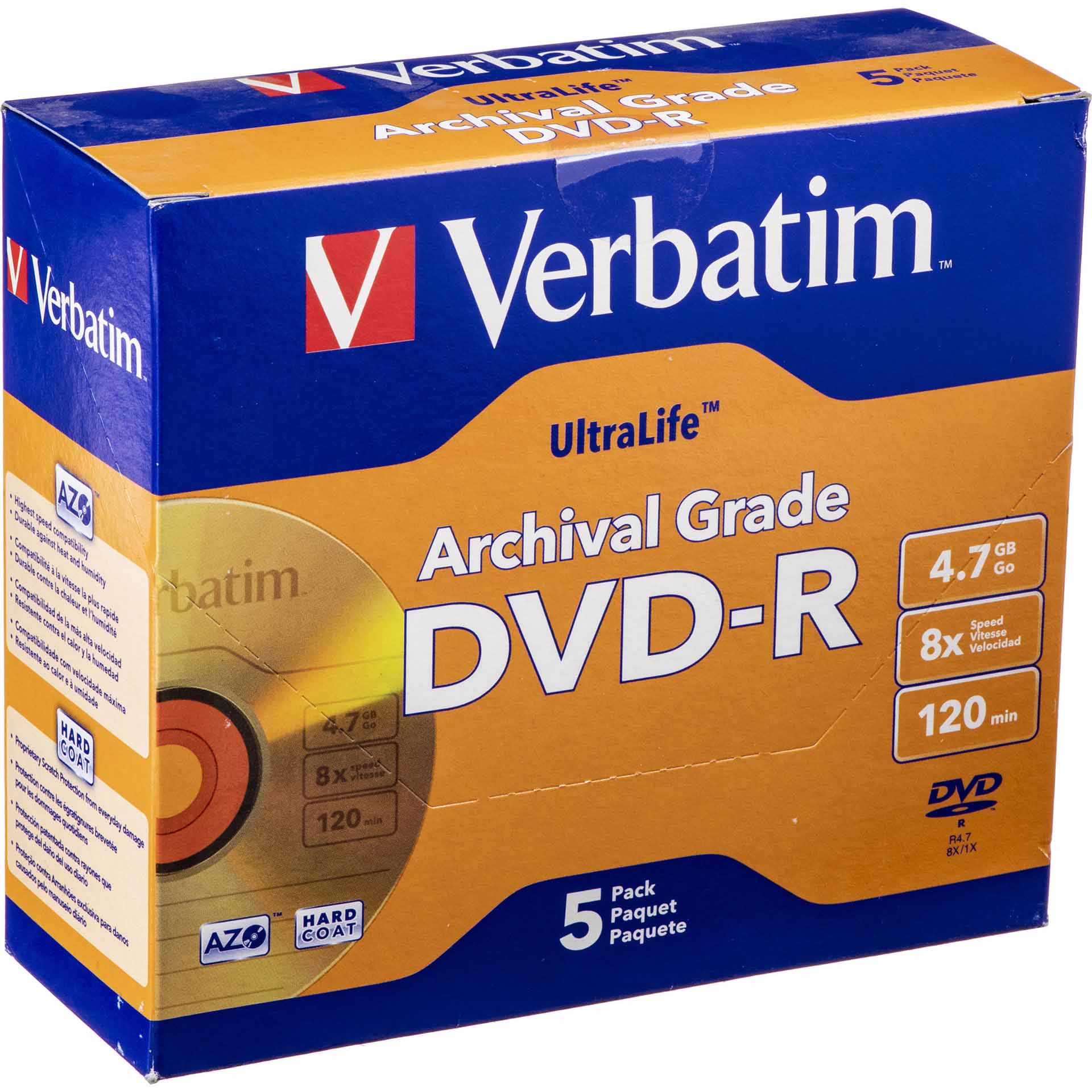
Keep data secure and organized on rewritable DVDs.
View full-sized image.
Cloth Products (T-Shirts, Towels, Hats, Banners, Flags)
- Clean items before storing, if possible.
- Wrap products in acid-free tissue paper or clean, white 100 percent cotton and store in acid-free boxes.
- Store flat, if possible.
Paper Photographs, Negatives and Slides
- Don’t try to flatten curled photographs or remove them from self-stick pages. Consult a professional.
- Use acid-free photo corners that meet archival requirements if photographs must be attached to paper.
- Use acid-free paper envelopes or plastic sleeves made from uncoated pure polyethylene, polypropylene or polyester (e.g., Mylar) to store negatives.
- Store photographs smaller than 8” x 10” vertically (on their long edges) in plastic sleeves or paper envelopes in a box.
- Store photographs larger than 8” x 10” horizontally (flat) in folders or sleeves in a box.
- An option for storing photographs that are all the same size (e.g., 4” x 6” prints) is either horizontally or vertically in a box together without any sleeves or folders.
- Use a soft lead pencil (#2) to write on the back of photographs on uncoated paper. Write on an edge.
- Use a felt-tip marking pen to write on the back of photographs on resin-coated paper. Again, write on an edge rather than in the middle. Wait for the ink to dry before stacking the photographs.
- Store fragile photographs or ones that are handled often in plastic sleeves to avoid damage from abrasion.
- Photocopy or scan damaged photographs to protect the originals.
- Hold a photograph by its edges to avoid getting dirt, oils or fingerprints on it.
- Don’t stuff boxes or folders too full.
- Don’t discard the original photographs and negatives after digitizing them.
- Store slides safely in polypropylene plastic boxes, metal boxes, paper boxes or plastic slide pages (no polyvinylchloride!). Store slides of the same size together.
- Use ultraviolent-filtering plastic or glass to slow fading for photographs framed for display.
Metal Objects, Nametags
- Store buttons, name tags, medals or metal pins individually in boxes or plastic sleeves, which can then be stored in a larger box. A sandwich baggie will hold an individual object.
Useful Websites That Can Provide More Detail on Preserving Objects:
American Institute for Conservation: http://www.conservation-wiki.com/wiki/Main_Page
National Archives: https://www.archives.gov/preservation
Library of Congress: https://www.loc.gov/librarians/preservation/
YouTube: videos on how to digitize various media
Suppliers of Archival Products
University Products: https://www.universityproducts.com/
Archival Methods: https://www.archivalmethods.com/
Hollinger Metal Edge: https://www.hollingermetaledge.com/
Conservation Resources International: http://conservationresources.com/
— Lee Ann Draud, Publications Director
#ACENews