originally posted on 3/12/2021 11:18:11 AM
All images Courtesy Battersea Fun Fair 1951 – 1974. View full-sized image.
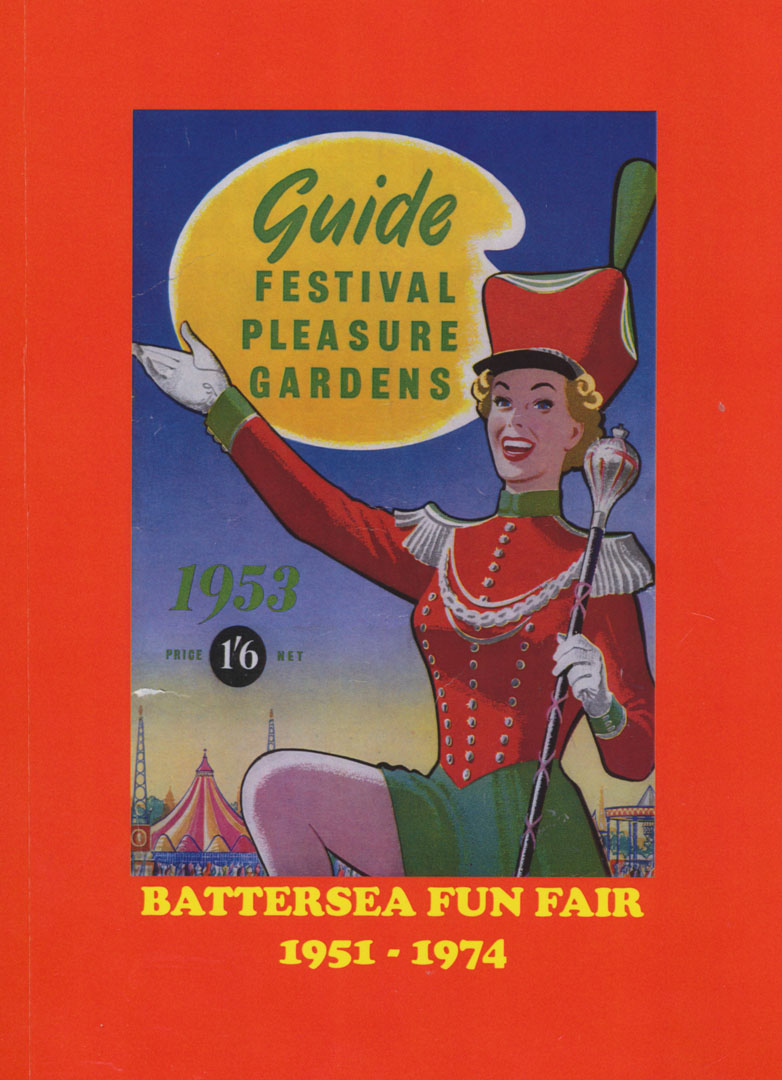
Battersea Fun Fair is probably not well known outside of Britain, but the park that remained after the closure of the Festival of Britain, could be considered the U.K.’s first theme park — long before Chessington, Thorpe or Legoland, and even pre-dating Disneyland by four years. The park incorporated two themes — imaginary Olde England and futuristic England.
Amusement park historians Nick Laister and Robert Preedy have written a book, Battersea Fun Fair: 1951 – 1974, covering the London Fun Fair that touched millions of lives over its 24-year existence. Sadly, the park is probably more known for its infamous roller coaster disaster in the 1970s that significantly influenced safety systems throughout Great Britain and the rest of the world.
Battersea Pleasure Gardens and the Festival of Britain opened in May 1951 — 100 years after the Great Exhibition of 1851. The festival was a national public exhibition mostly centered on London’s South Bank, although there were linked events and celebrations spread throughout the country. The timing was to celebrate the centennial of the Great Exhibition. However, the festival was also designed to let people know that Britain was back following World War II. Restoration and cleanup had proceeded at a remarkable pace, and it was time for a post-war celebration. The festival, in part, was an attempt to send a message to the world that Britain had recovered and was once again open for business, trade and tourism.
View full-sized image.
While the Festival of Britain may have resembled a world’s fair, it was crafted to celebrate the British Commonwealth. International themes were therefore absent, and the fair promoted and celebrated British science, technology, industrial design, architecture and the arts. Although the festival was considered a triumphant success from a public relations standpoint — attracting more than 18 million visitors — it cost £10.5 million to build but only brought in revenues of about £2.5 million. The net loss of £8 million is roughly the equivalent of about $350 million in today’s U.S. dollars.
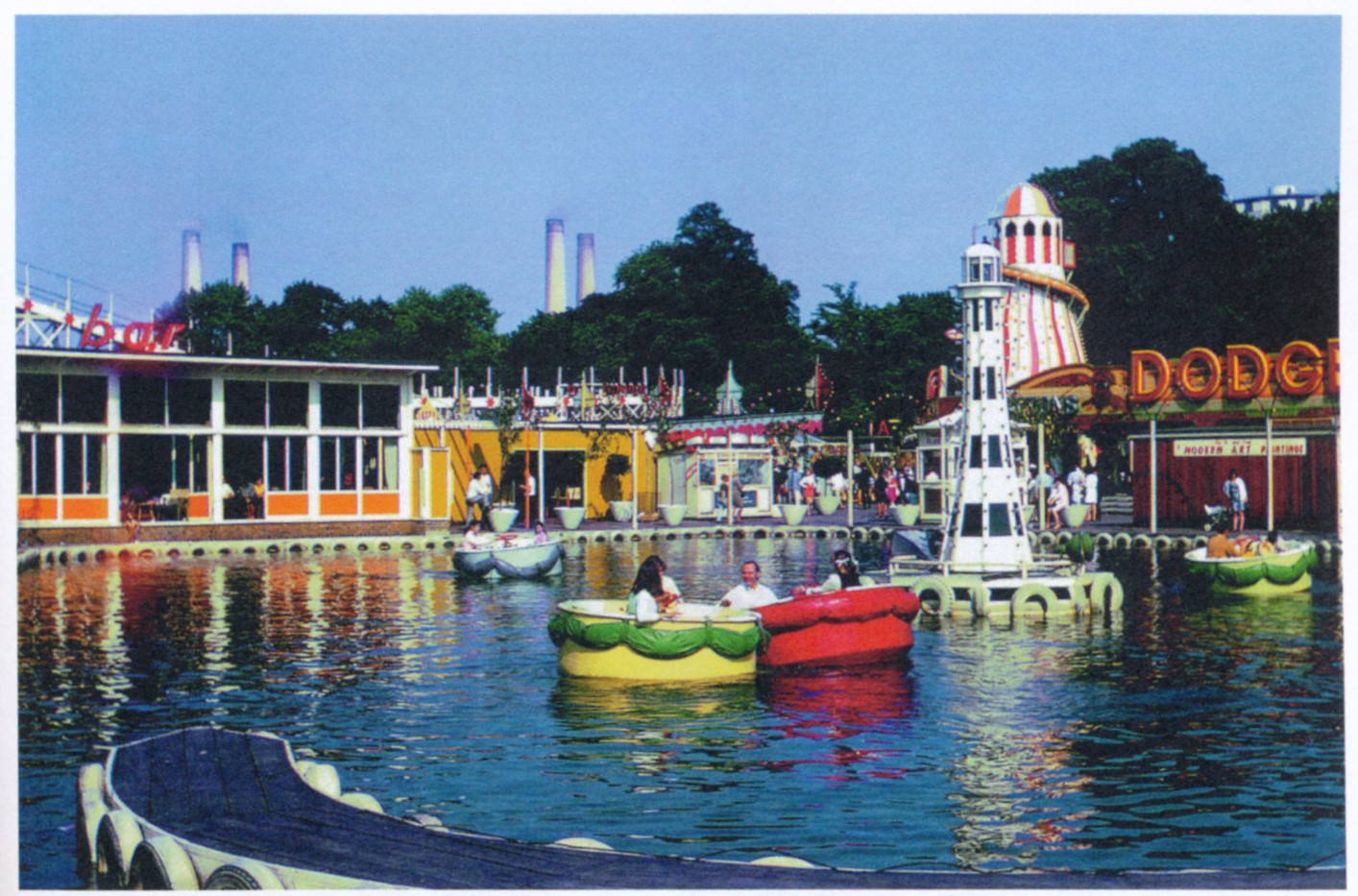
The Fun Fair amusement park occupied nine acres of a larger 37-acre Pleasure Gardens within the festival. It was roughly the same size as Great Yarmouth but smaller than other seaside amusement parks at the time such as Blackpool Pleasure Beach, which occupied 40 acres, or Dreamland with its 18 acres. However, its location close to London meant that it could draw huge crowds. Following the closure of the festival, the Pleasure Gardens and the Fun Fair both remained.
View full-sized image.
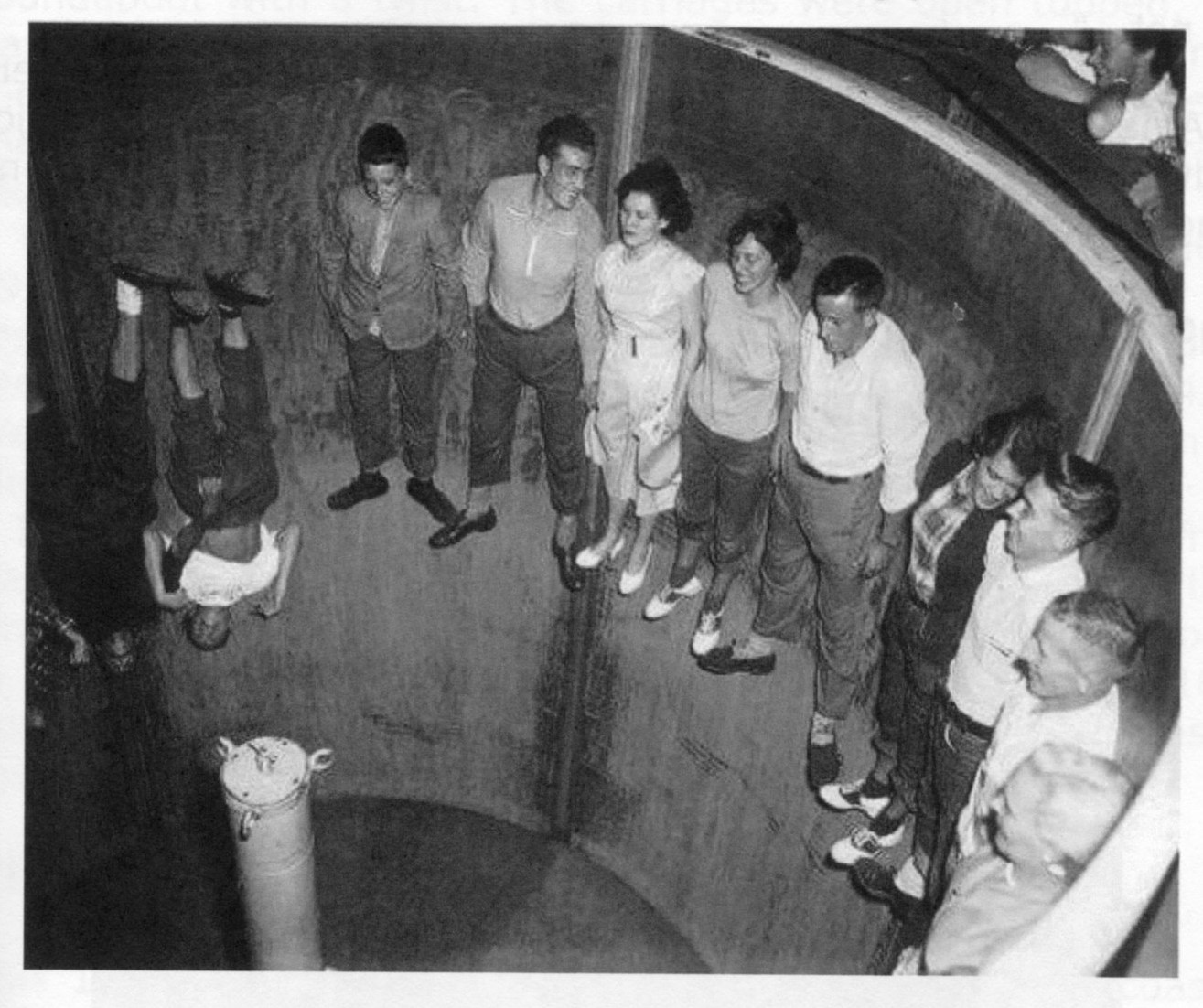
Most of the book focuses on the Fun Fair itself. Although the festival was to be a celebration of British ingenuity, designers of the Fun Fair park had to turn to foreign suppliers to obtain some of the rides. One of the first Rotor rides to ever operate came from a supplier in Germany, and during secret shopping missions to the United States, operator John Collins acquired a Hrubetz Bubble Bounce, Boomerang flat ride, Eyerly Octopus and Dive Bomber, and Volare Bros. Skywheel. In keeping with the futuristic ambiance, the park employed bright colors, whimsical structures, artistic floral displays and the very latest in electronic illumination.
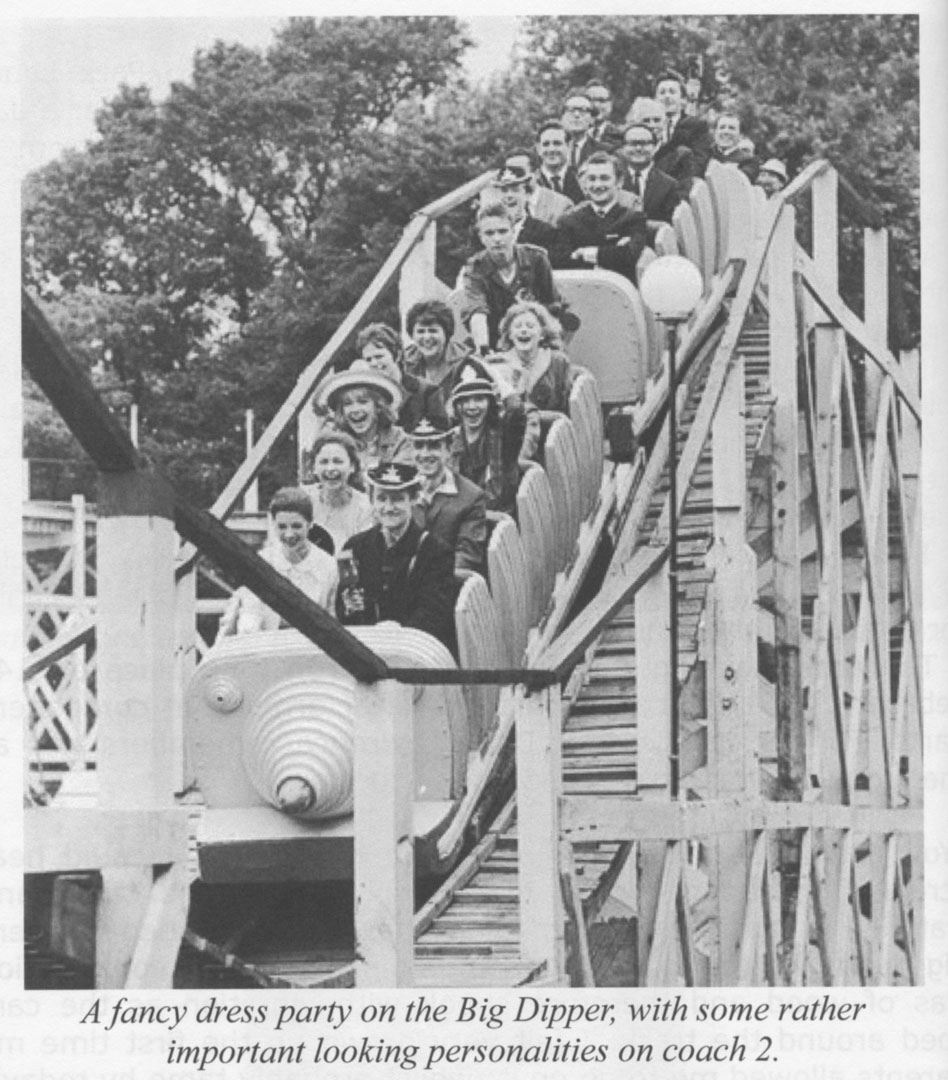
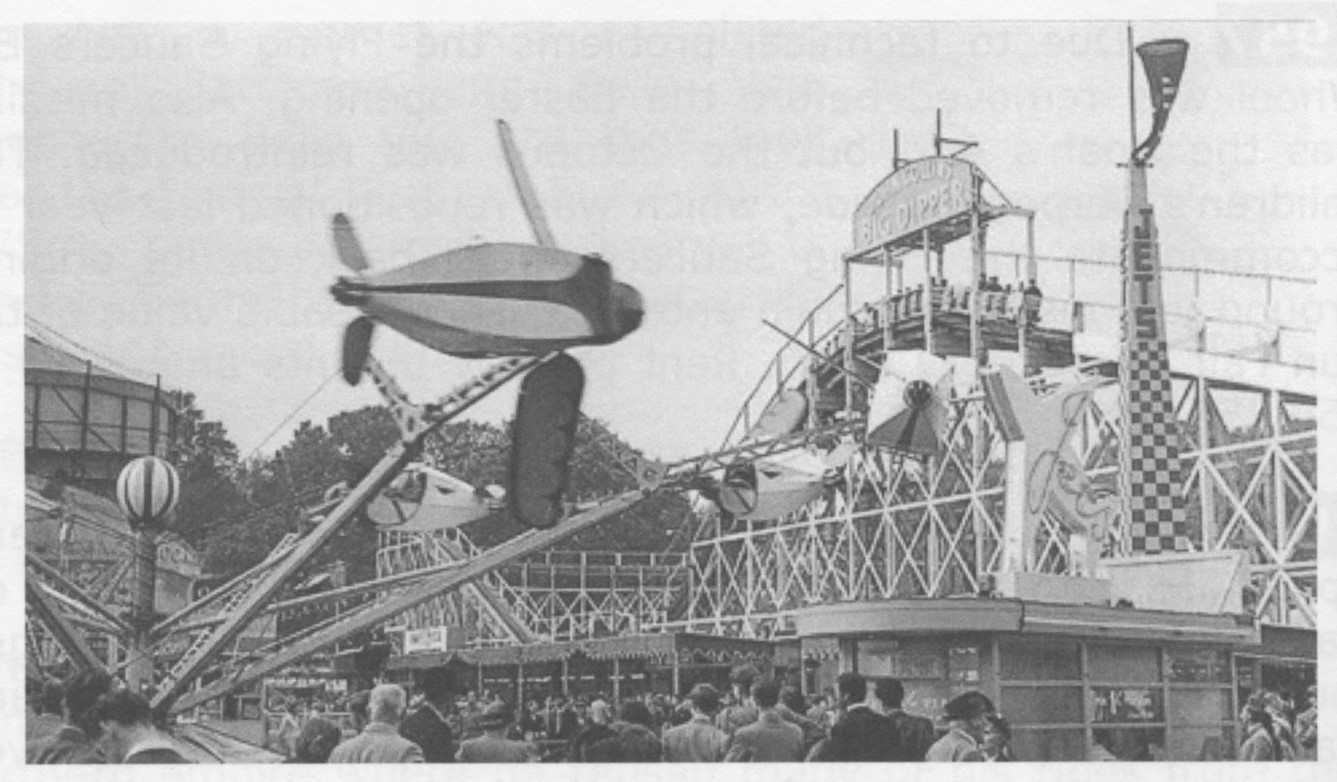
The Big Dipper roller coaster, the park’s main attraction, had an interesting history before coming to the park. It operated from 1946 to 1950 as Big Dipper at Crystal Palace Amusement Park in Sutton, but its existence can be traced back even further, as the coaster was created from parts of Southport Pleasureland’s Mountain Caterpillar Railway and Scenic Railway, which date as far back as 1922. The original intention was to have the coaster operate at Battersea Fun Fair for one year and then return to Sutton. Although the concrete foundation blocks were left in place, and signage promoted the coaster’s return, Big Dipper stayed at Battersea, and Crystal Palace was left devoid of a coaster until it eventually closed in 1962.
View full-sized image.
Big Dipper, as to be expected, was the highest-grossing amusement ride during its 22-year run at the park. The ride featured eight hills along its nearly three-quarters of a mile of track. Although known as a coaster, it was essentially a scenic railway, with a cable lift and an on-board brakeman.
In addition to Big Dipper, Collins erected Dragon Mountain Scenic, a small wooden coaster enclosed in a mountain-style veneer. Like Big Dipper, Dragon Mountain Scenic was built from previous coasters including Mountain Thriller from Cleveleys Pleasure Beach, along with leftover wood not used on Big Dipper. Dragon Mountain Scenic operated for four years before being replaced by a water chute.
As with most parks of the time, the rides were supplemented with live entertainment, restaurants and the obligatory dance pavilion. The Pleasure Gardens had two theaters featuring nightly entertainment and seven restaurants. The dance pavilion was said to have the largest single-pole- supported roof at the time, covering a massive dance floor.
The Pleasure Gardens and Battersea Fun Fair struggled after the closure of the great festival, but in 1953, admissions started to increase. By 1954 new boat service brought additional customers from central London, and Battersea Fun Fair settled into what were considered its golden years. Laister and Preedy dedicate chapter five of the book to year-by-year coverage of the park from 1954 through its closure in 1974. Park management constantly updated the mix of rides and attraction, the grounds were well-kept and the gardens well-manicured. At its zenith, the park was attracting 2.5 million visitors a year.
In addition to the two wooden coasters, the park operated three steel coasters over the years: a steel Little Dipper kiddie coaster was popular at the park from 1959 to 1963; a Pinfari Zyklon Z40 ran in the 1970s. It was then replaced by a larger Zyklon Z64 in 1974.
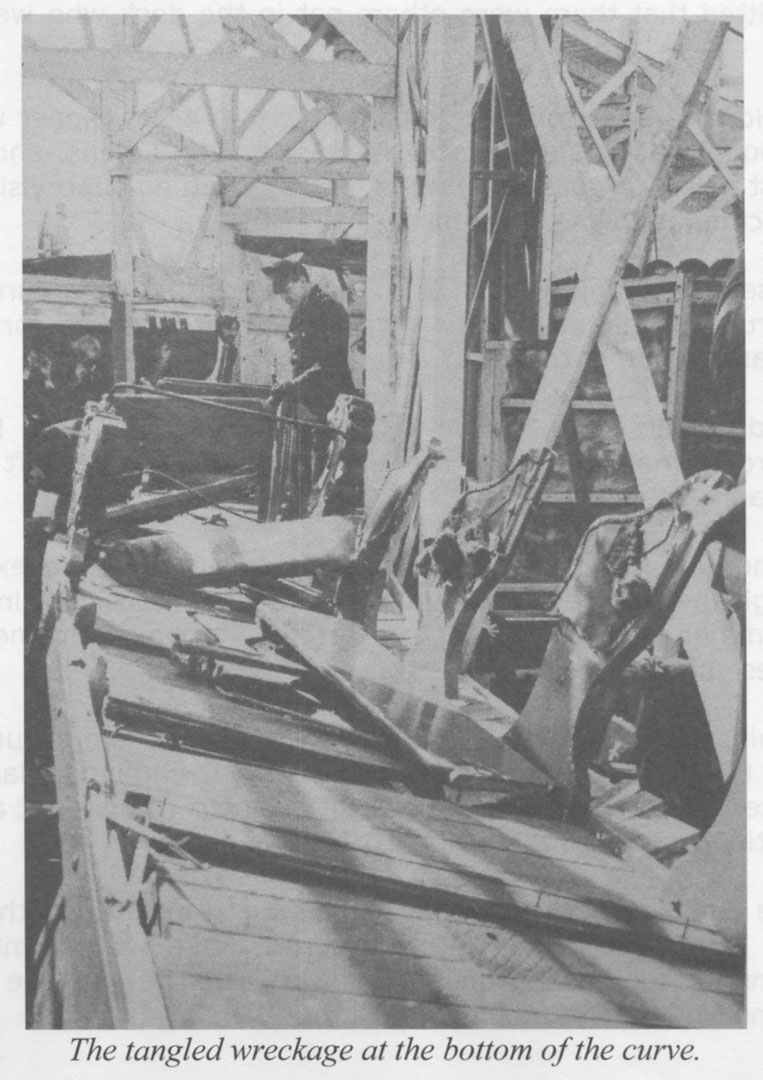
Chapter six covers the Big Dipper tragedy, which resulted in the deaths of five children and injuries to 13 others. On May 30, 1972, the train came loose from its haulage cable and rolled backward down the lift hill. Despite the efforts of the brakeman to stop the train it continued to gather speed, jumped the rails and crashed through side fencing leaving a mangled wreck at the bottom of the hill. Investigations revealed that the ride had been allowed to deteriorate. The grip that attached the train to the haulage cable was badly worn, as were the brakes that should have provided enough friction to stop the train. A secondary system of eight steel spikes, or dogs, were supposed to dig into the wood in the event the train started rolling backward. Four of the eight were missing, and only one managed to contact the rotting wood. It was not enough to prevent the train from rolling back down the lift hill. One manager and one engineer were charged with manslaughter but were eventually cleared of any wrongdoing. Not one person or party was held responsible or found guilty of causing the accident.
View full-sized image.
Big Dipper was demolished in 1973. Following the incident, stricter regulations were put into place, and much stronger, steel ratchets with anti-rollbacks became the norm. The park struggled for two more years, finally closing down in 1974. Battersea Park is now a 200-acre green space with a small children's zoo, a boating lake, a bandstand and outdoor sport facilities. Little remains of the Festival Gardens, and there are no traces of any rides and nothing to indicate that it was once home to a vibrant theme park.
The last 50 pages of the book contain the Fun Fair gallery, with black and white and color photos illustrating the history of the park during its 24-year existence.
Co-author Nick Laister spent the last 17 years researching material for the book. He conducted multiple interviews and found many who were willing to share their stories as well as photographs. The book is a fascinating retrospect of the little-known Battlesea Fun Fair. The book, titled simply Battersea Fun Fair: 1951 – 1974, can be purchased online at www.joylandbooks.com.
— Jeffrey Seifert
View full-sized image.
#ACENews