originally posted on 2/10/2023
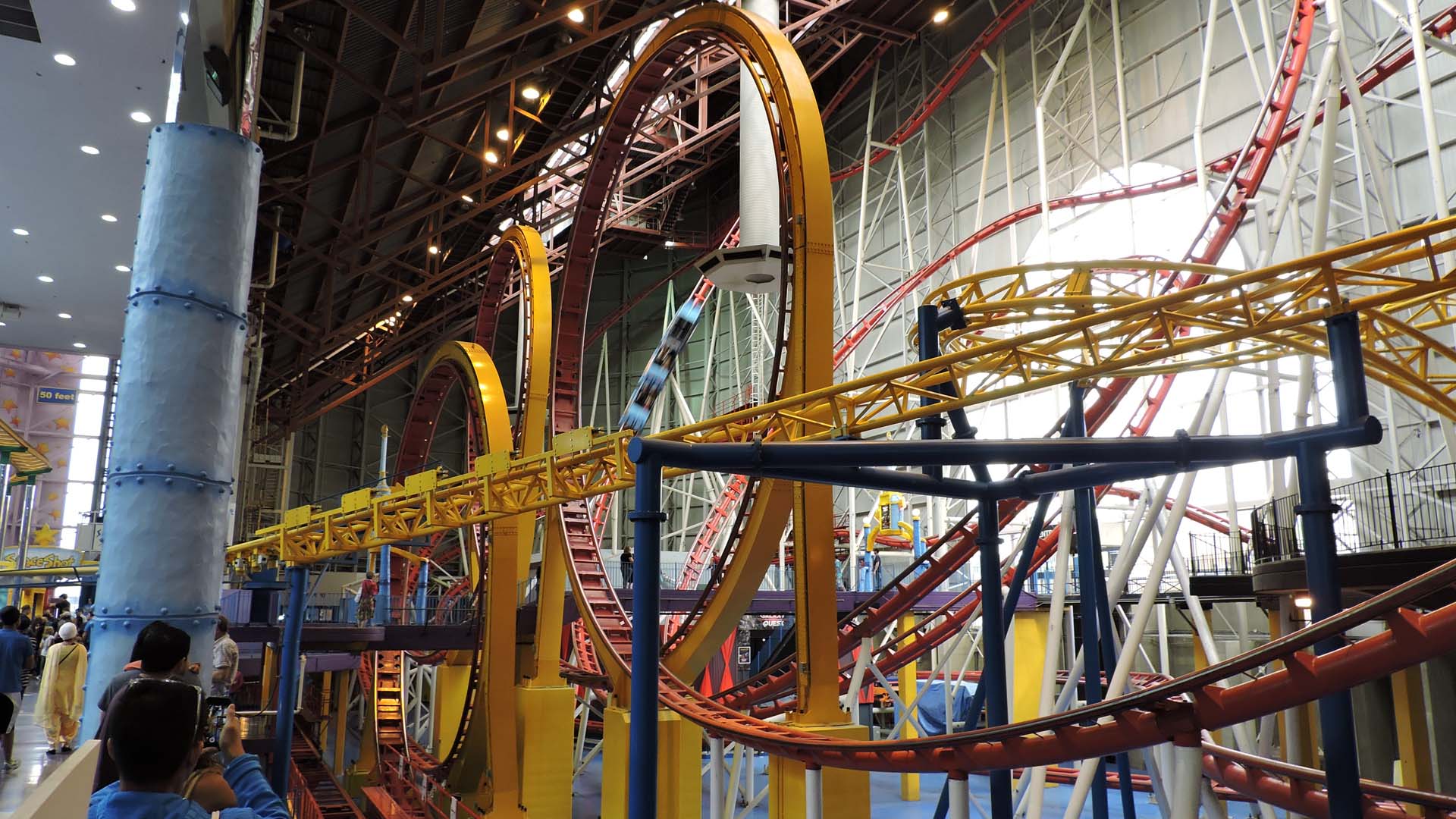
Mindbender.
Photo: Jim Winslett. View full-sized image.
The January 30 news of Mindbender closing at West Edmonton Mall’s Galaxyland (Edmonton, Alberta, Canada) was a harsh blow to its multitude of fans.
The ride was a larger, longer, permanent counterpart to the traveling Dreier Looping, a portable coaster manufactured in 1984. Both were designed by Werner Stengel and manufactured by Anton Schwarzkopf — two legends in the world of steel coasters — and feature three powerful loops.
According to a statement from West Edmonton Mall: "While the Mindbender will be missed, we are excited to announce that we are working on groundbreaking new plans for family thrills that will immerse our guests in an out-of-this-world experience."
Although the decommissioning and removal of the massive coaster is underway, the “new plans” have yet to be revealed. Interestingly, when the coaster was built in the mid-1980s during the second phase of the mall, the ride went in first with the walls and roof added later. How the 145-foot-tall coaster will be removed might prove to be a challenging trick.
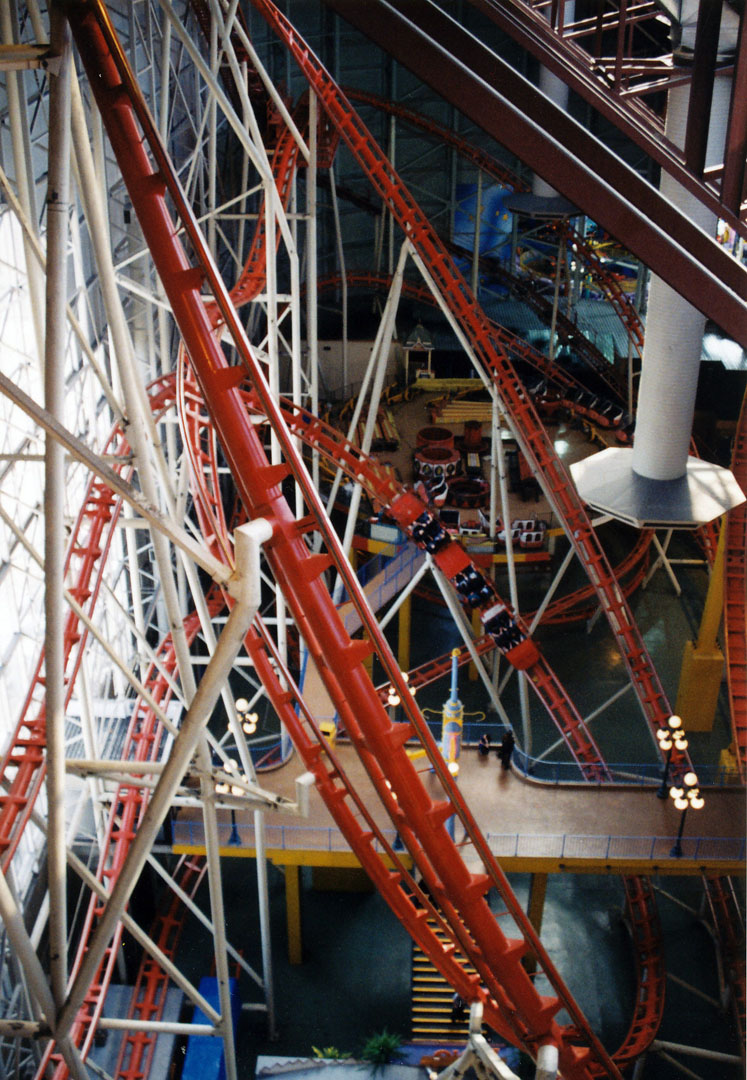
Photo: Jeffrey Seifert. View full-sized image.
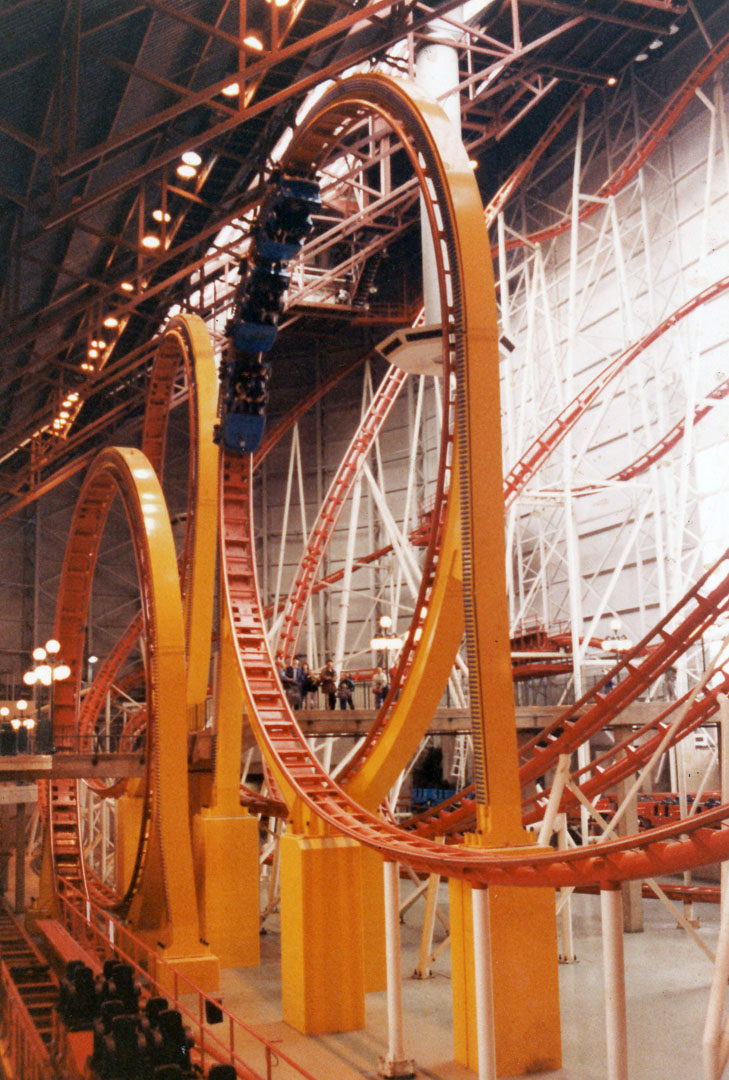
Photo: Tim Baldwin. View full-sized image.
Furthermore, there is no information as to whether the ride will simply be discarded or if the disassembly will be handled carefully, making a potential sale possible. Mindbender opened in 1985. There are certainly many steel coasters — some of which are Schwarzkopf — that are older and still operate.
The triple looper last ran in July of 2021, but now 18 months later, the attraction’s conclusion has been written. Some reports allude to the Hasbro theming becoming more dominant in the park, and Mindbender didn’t fit the family dynamic. Whether that was the actual reason or if it was owing to maintenance concerns, the fate has been sealed.
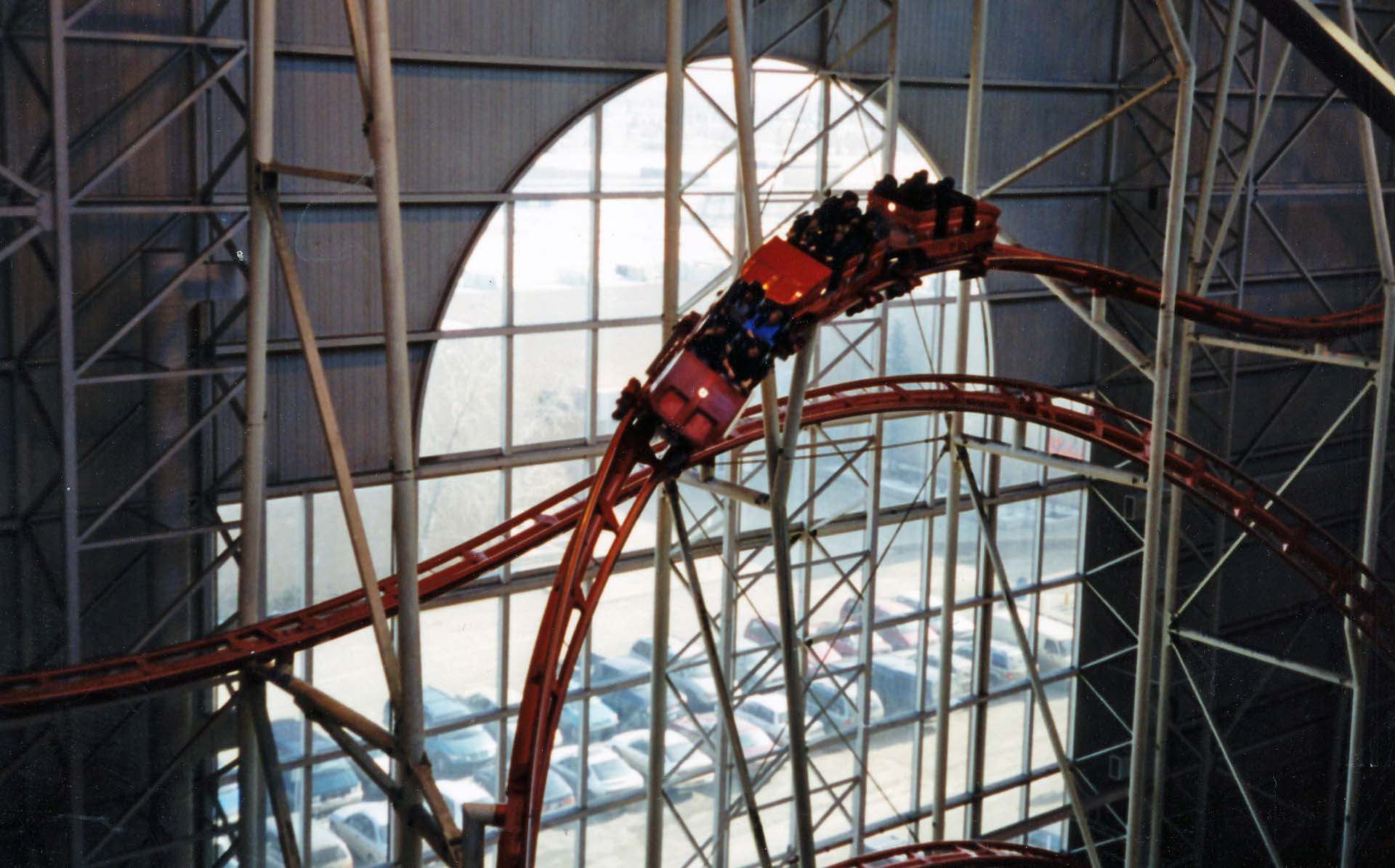
Photo: James Mitchell. View full-sized image.
Enthusiasts who have enjoyed a spin on Mindbender will fondly remember the curved lift that took riders close to the ceiling before dropping them into a curving plunge. With just slightly under 4,200 feet of track, the layout was known for its three loops, but it featured several large dives and a spiral finale.
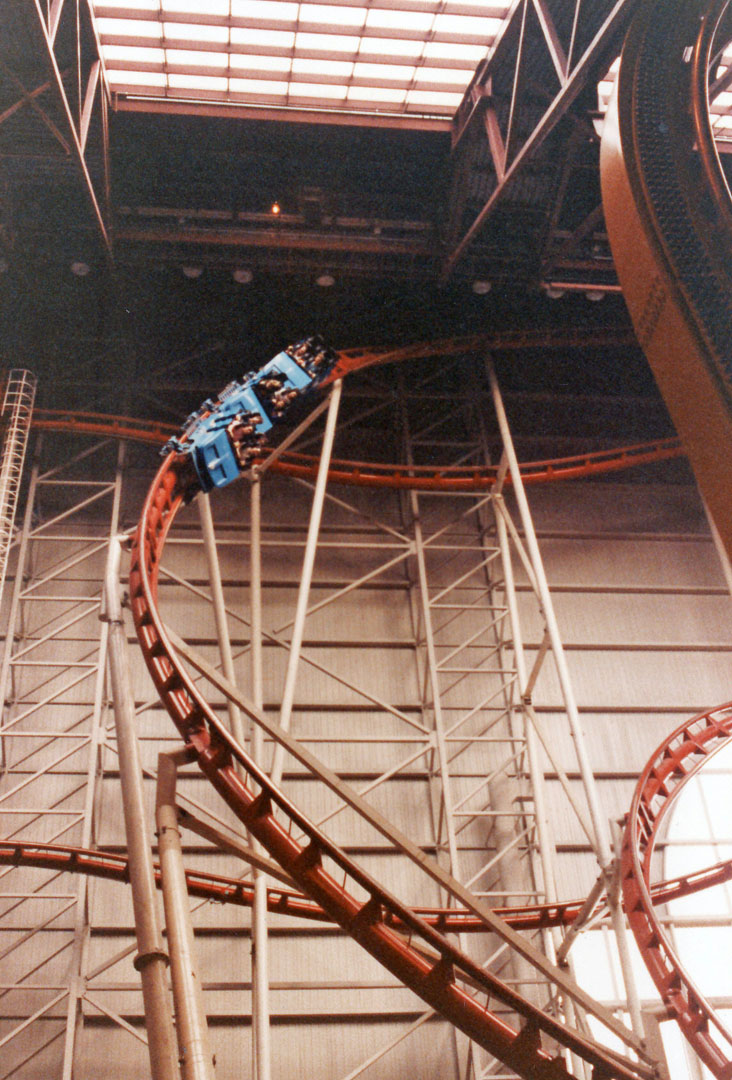
Mindbender’s first drop plunged from mere feet from the ceiling.
Photos: Tim Baldwin. View full-sized image.
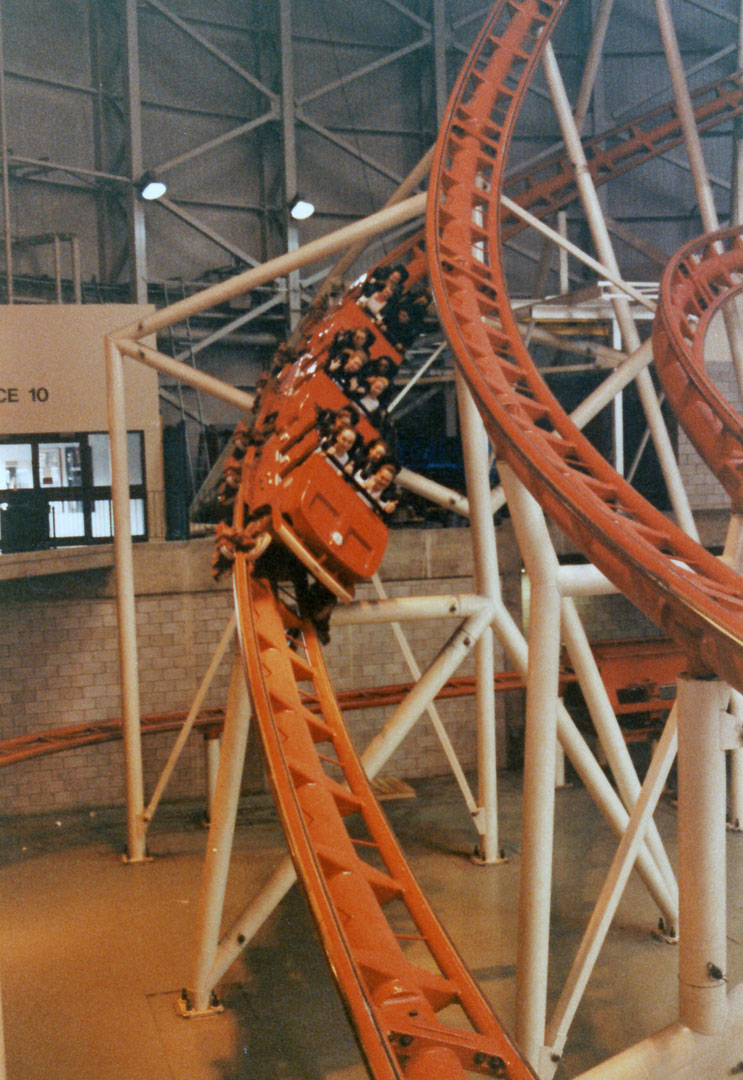
Intense G forces were felt throughout the ride.
View full-sized image.
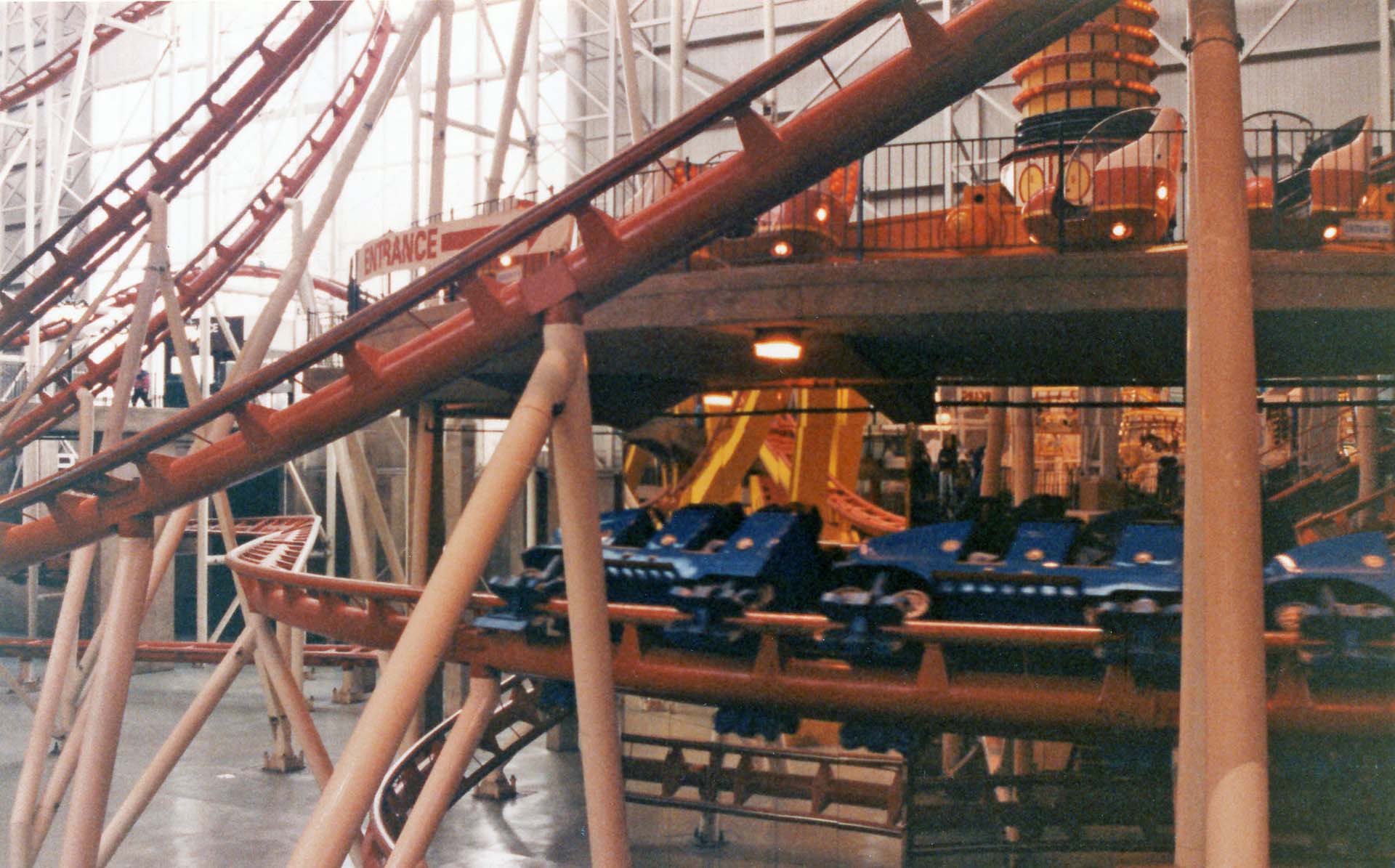
The ride’s finale was a spiral around a mirrored column.
Photo: Tim Baldwin. View full-sized image.
One of the architectural features unique to Mindbender was a walkway that threaded between the two lower back-to-back loops and traveled right through the first, larger loop. That was a snazzy benefit for photographers, although indoor lighting often made photos of the monstrous coaster difficult.
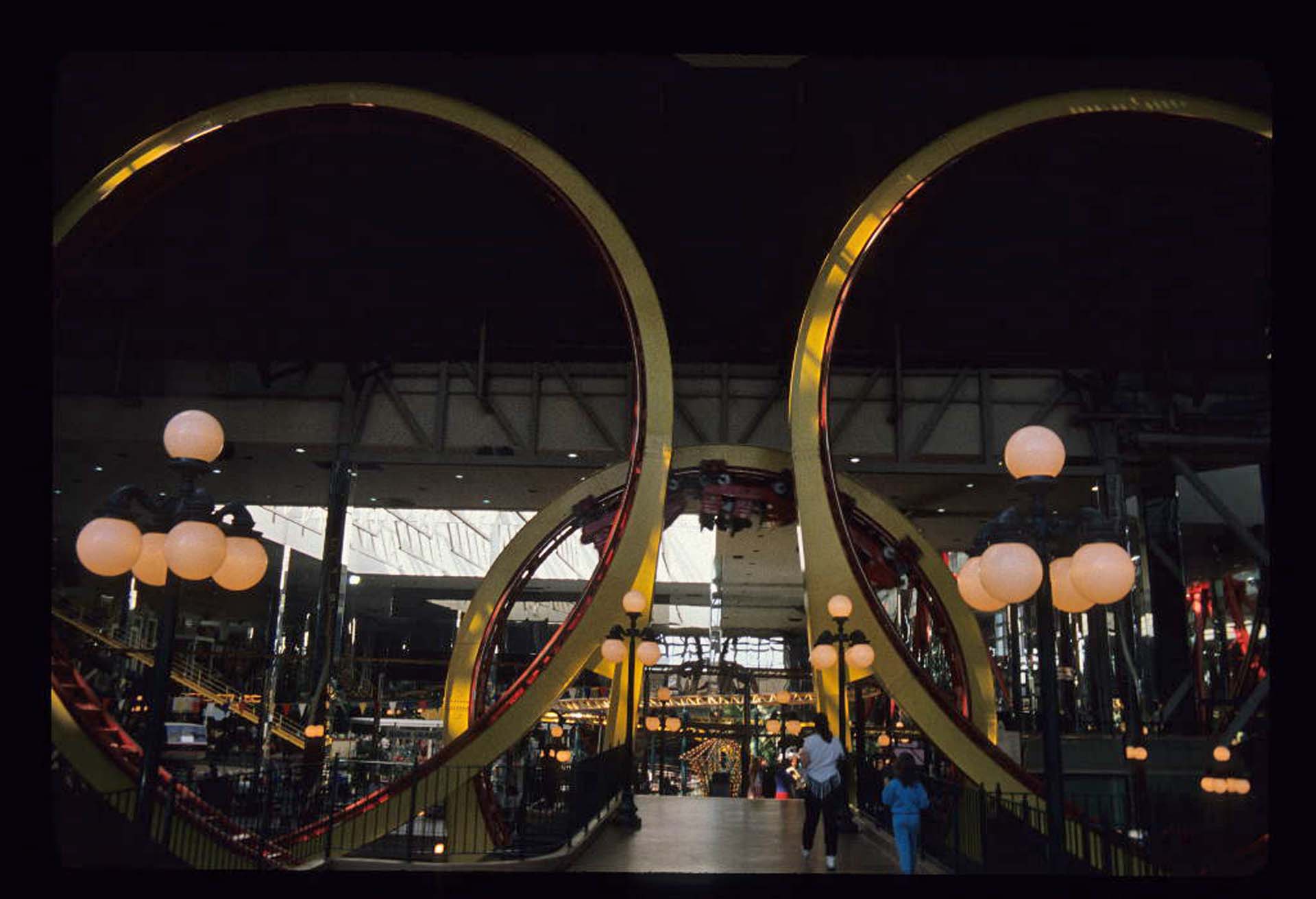
Arriving guests could walk a pathway between the two larger loops and directly though the lower one.
Photo: Michael Horwood. View full-sized image.
Mindbender owned its piece of infamy. Just a year after the coaster opened, an issue with the wheel assembly caused the back car to derail, and three people were killed. It reopened several months later in January 1987. The original four-car trains were replaced with three-car trains that sported three “lead” cars, which gave each car four sets of wheels. This arrangement provided more safety and security regarding the concerns over the previous wheel assemblies. Capacity was thus reduced from 16 to 12 riders.
Also, for a period of time, the last car was turned around backward — for the heartiest of riders who could handle the intensity in reverse.
— Tim Baldwin, ACE News Editor
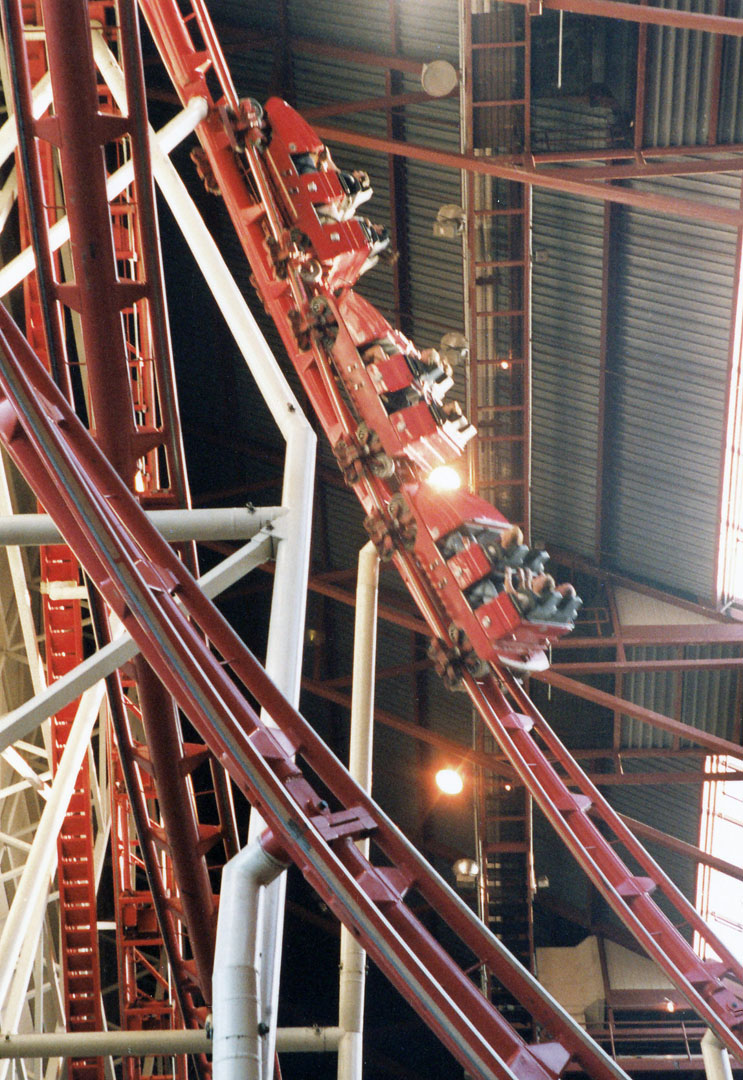
The photo above, taken in 1999, shows the back car facing forward.
Photo: Steven Wilson. View full-sized image.
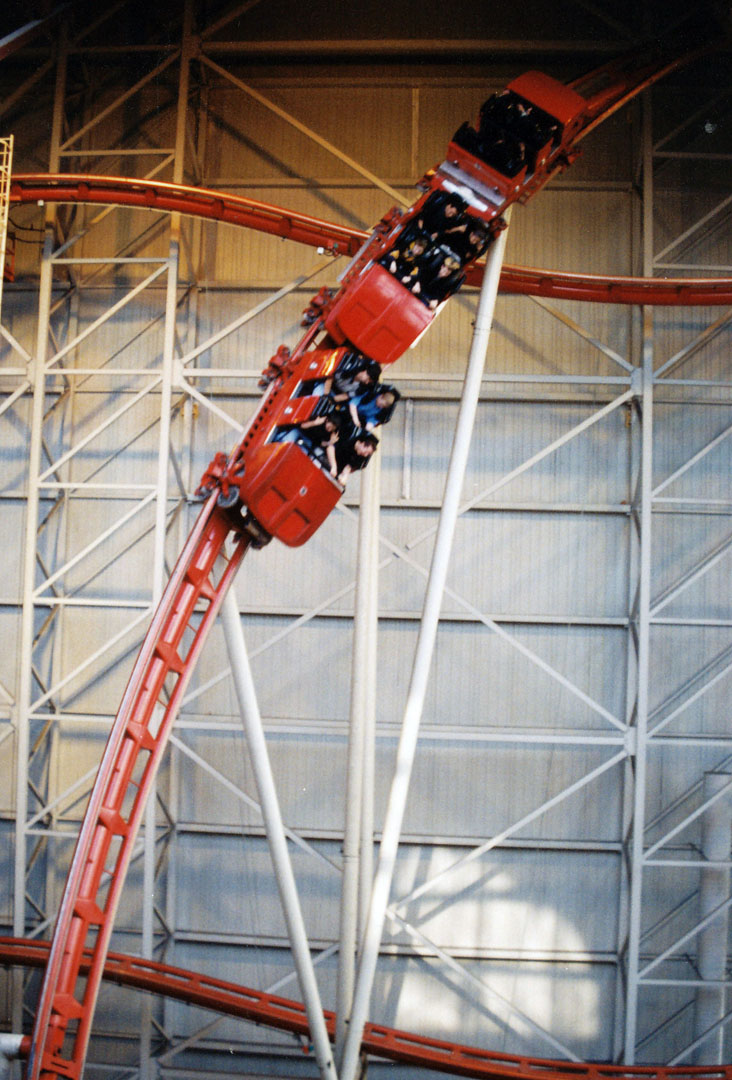
This photo shows the back car turned around in 2000.
Photo: Jeffrey Seifert. View full-sized image.
#ACENews