originally posted on 4/14/2025
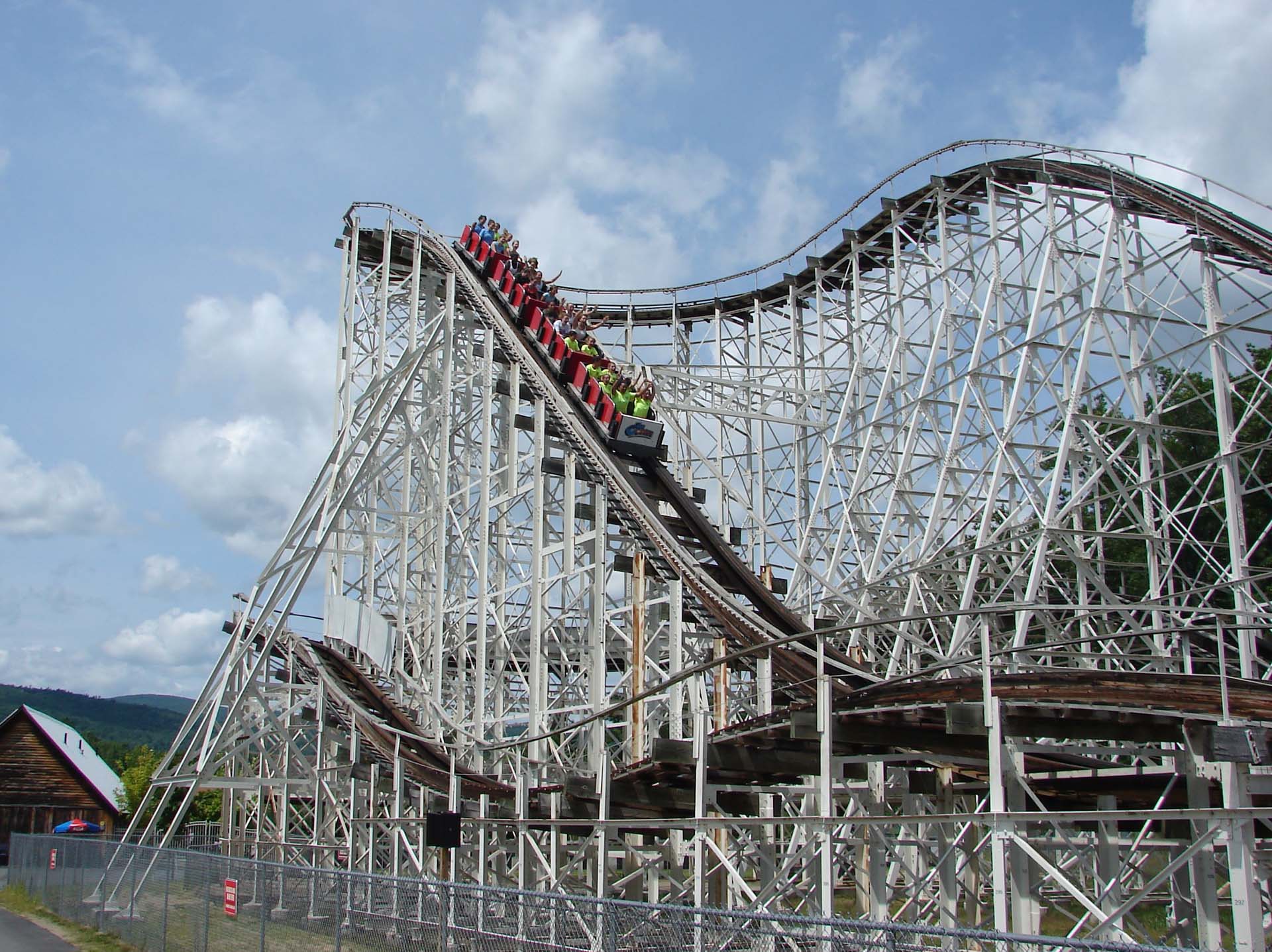
Six Flags Great Escape Comet.
Photo: Tim Baldwin. View full-sized image.
Once it's been decided that a coaster will have a chance at a second life at another park, then the real work begins.
It starts at the park where the ride is being relocated. The site where the coaster will stand has to be made ready for the saved ride’s revival. This can be as simple as cutting the grass or as complicated as moving buildings or existing amusement rides. Once the site is cleared, it's ready for the concrete footings to be laid out and poured. Because of its appearance, the ready-for-wood structure area is often compared to a graveyard with hundreds of concrete footings looking like headstones.
Before starting new lives at new parks, Giant Coaster at Paragon Park in Hull, Massachusetts, and Rocket at Playland Park in San Antonio, Texas, had to be carefully disassembled.
Photo: Dave Jackson. View full-sized image.
Photo: Jonathan Hymes. View full-sized image.
Before starting the coaster’s disassembly and moving of the pieces to the new location, the following needs to be considered:
- How much time is to be allowed for the disassembly and moving of components? It is always said that “time is money,” and as with just about any construction job, the speed of the progress depends on how many helping hands are present.
- Where to stage the coaster’s components at the new park? They can't be placed directly in the spot where the coaster will be reconstructed (otherwise they will be in the way) and instead should be adjacent to where the coaster will be rebuilt for ease of access during the reconstruction process. This can sometimes be difficult in an already tight park.
- The number of trucks (and of what size), how many workers will be available to assist, the distance between the locations and how many trips will be required.
All of the preceding needs to be worked out before the disassembly of the coaster in its original location begins.
The first part of the disassembly is the removal of all the steel laminates from the track structure. This is usually accomplished by cutting the bolts since they're often too rusted to take the time to unbolt. The steel pieces then need to be numbered so the builder knows where to install them when delivered to the new location.
This step is followed by disassembly of the lift system motor, sprockets, lift chain, lift hill chain trough and anti-rollback steel. All of these are taken apart carefully with the expectation that they will be used again. Depending on the motor’s history, it might end up being sent to a motor shop for a rebuild. This precaution might be taken so the motor does not break down in a short amount of time after being installed at the new location.
Once the steel is out of the way, it is time to gather the chain saws and scrap the wooden track. Because of the staggered nature of the ends of the track boards and how many nails are used to construct the track stack, there is no practical way to take the track apart for the move. Therefore, it goes right in the dumpster.
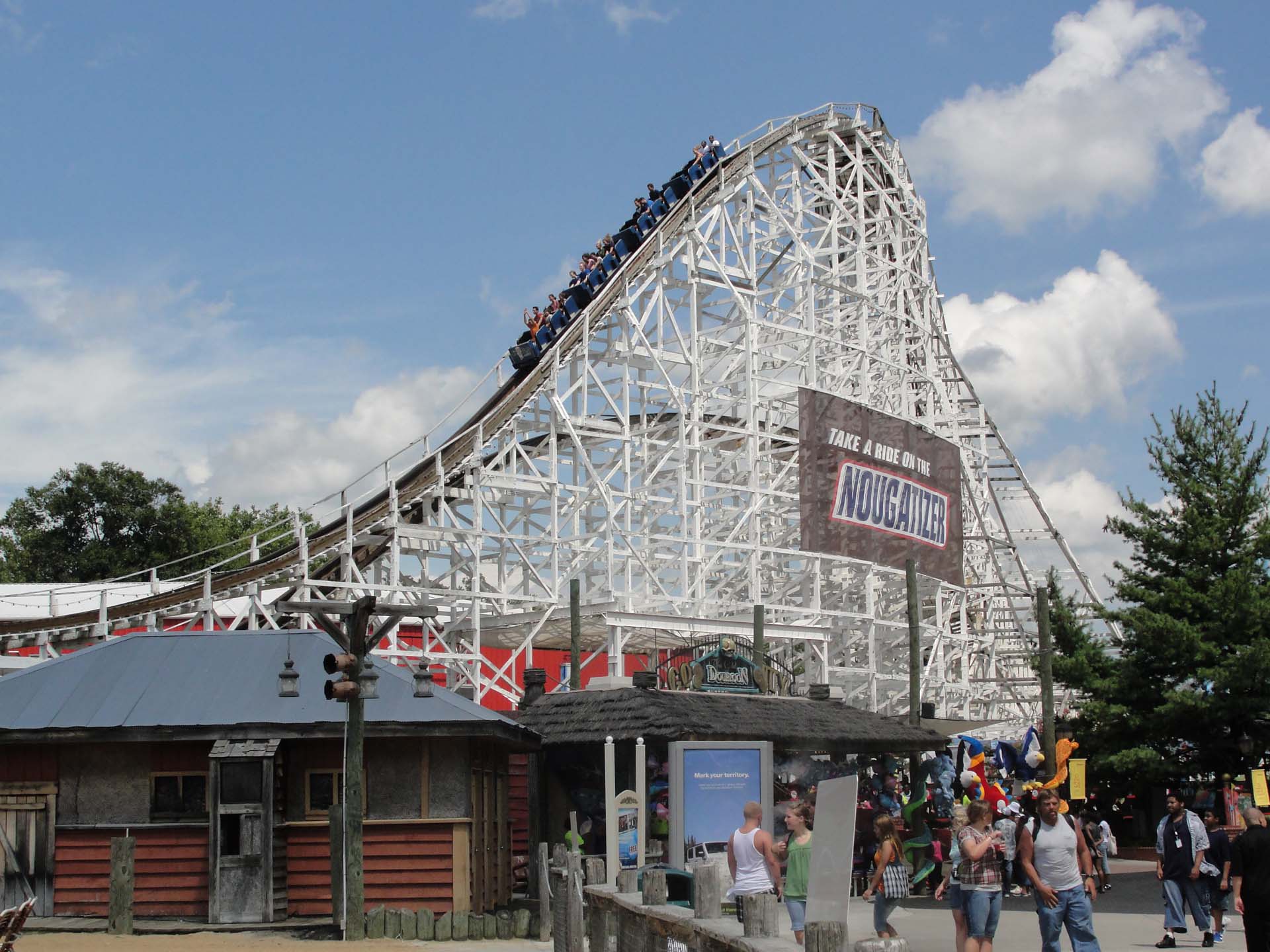
While it is likely no original wood remains from Giant Coaster, the process of relocating the roller coaster involved carefully numbering its bents prior to disassembly.
Photo: Howard Gillooly. View full-sized image.
Disassembly of the structure follows. Each bent is numbered/lettered so its correct position can be duplicated at the new location. Starting at one end, the ribbon boards and batter bracing boards are detached from the bent legs. Depending on the condition of the ends of those boards. they are unbolted/unscrewed if they can be used again or sawed off close to the bent leg if the ends are bad.
The loose bents are then placed flat on the back of a flatbed tractor trailer. This process is repeated again and again, building a stack of bents (in proper numerical order) on the back of the trailer. Once the trailer is fully loaded, everything is tied down and the truck is sent on its way to the new location.
It should be noted that how the bents get stacked on the tractor trailer is related to their size, the size of the workforce and whether a crane is being used. A small, portable crane is almost always needed at the disassembly site, as well as at the new construction site, for handling the larger bents on and off the trailer.
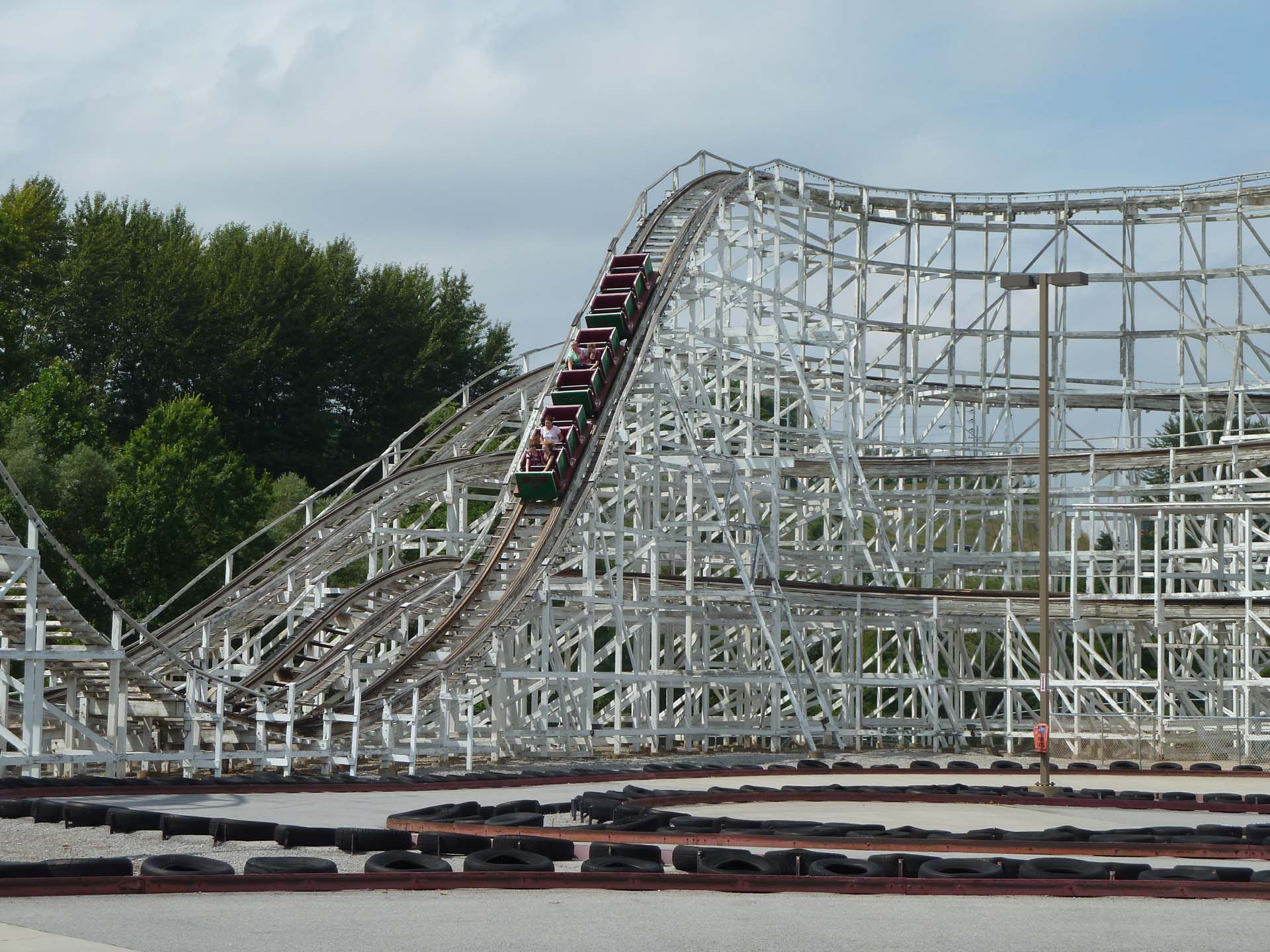
Components are inspected to decide what can be reused — in the case of Skyliner, both original trains made the move to Lakemont Park in Altoona, Pennsylvania.
Photo: Richard Koppelman. View full-sized image.
As the coaster is being dismantled, its components are inspected to see which ones will need to be replaced. Thus, a list can be made so the new park can order the needed items. The new owner hopes this list will be minimal, but the builder will nonetheless make sure not to use materials that will end up needing replacement quickly.
With the track stack scrapped, a lot of 2 × 12-foot lumber will be needed to build the new track stack. This order will likely be more than what the local lumber yard nearest the park can offer (unless it’s Knoebels), so the source will be asked to "send what you've got." As that is being used, the lumber supplier will have some time to acquire more. Many bolts, screws and nails to hold the pieces of the reborn coaster together are also needed, and because some of these hardware items aren't easy to find, the builder’s order is often the same “send us all you’ve got” when a source is found.
Once all the materials are on site at the new location, it's time to start reassembling the "jigsaw puzzle" of the wood coaster that was carefully taken apart. This will be discussed in the third and final installment in the next issue of ACE News.
— Stephen O’Donnell
#ACENews