originally posted on 7/27/2019
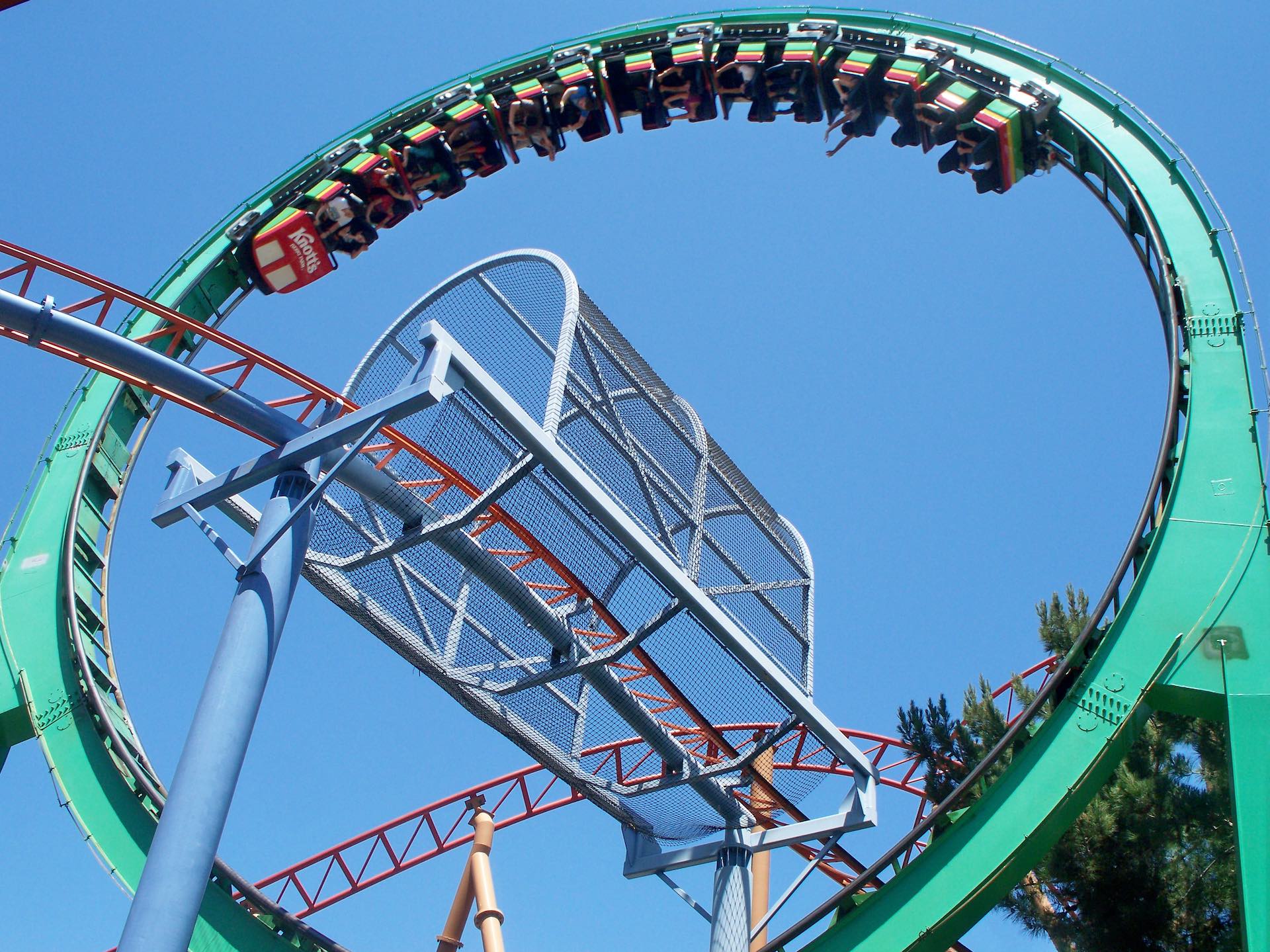
Photo: Adrian Lloyd. View full-sized image.
Montezooma’s Revenge at Knott’s Berry Farm Named ACE Roller Coaster Landmark
Knott’s Berry Farm in Buena Park, California, is perhaps one of the more unusual theme parks to come into being. Located on what was an actual berry farm owned by Walter and Cordelia Knott, the park had its humble beginning as a berry stand on the property where the Knott family sold their berries, jams, jellies and pies. Walter Knott specialized in successfully cultivating and growing the boysenberry, a cross between blackberries, loganberries and raspberries, which became a new sensation for his farm. Walter’s wife, Cordelia, began to sell fried chicken dinners in 1934 at the farm, which became a very successful form of income for the Knott family during the Great Depression. As lines grew for the successful restaurant, Walter decided to bring in actual abandoned buildings from ghost towns in the region to entertain guests while waiting to be seated. Soon Walter Knott’s “ghost town” became an attraction unto itself, drawing tourists from all over. When nearby Disneyland opened on July 17, 1955, visitors to Knott’s Ghost Town began to soar. Although Walter Knott had already added an authentic steam train in 1951 to the Ghost Town, he began to add other rides to the park. Soon Knott’s Berry Farm became a destination theme park unto itself.
1975 saw the park’s first roller coaster addition with the highly innovative Roaring 20’s Corkscrew from Arrow Development, the first roller coaster of the modern era to offer inversions that turned riders upside down. A year later in 1976, Knott’s added the Motorcycle Chase, also from Arrow, which was a modern rendition of the steeplechase coaster featuring motorcycle-style vehicles (in 1980, the ride was converted to the Wacky Soap Box Racers). The success of their Corkscrew coaster helped the Knott family to decide on their next addition, this time from German ride builder Anton Schwarzkopf.
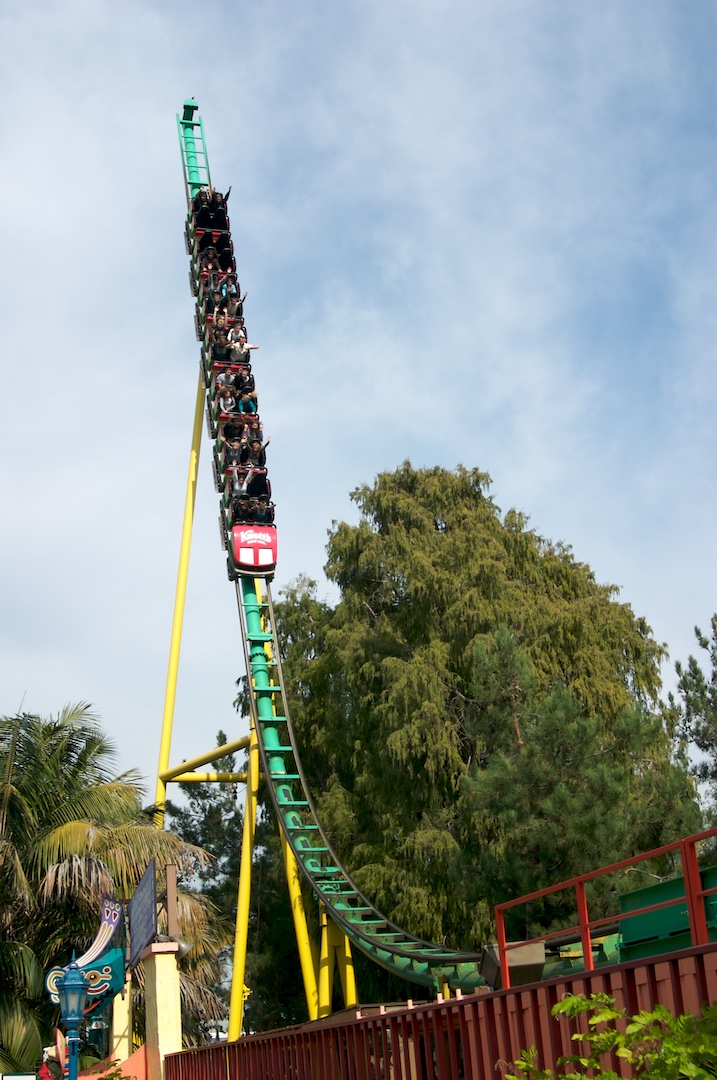
Photo: Curt Schimmel. View full-sized image.
In 1977 Schwarzkopf, along with engineer Werner Stengel, created their first-generation shuttle loop. The new style of looping coaster offered a linear track design that featured a 76-foot-tall vertical loop with two reverse points on the track. A large weight encased in a tall cylinder at the far reverse point would drop, pulling the 28-passenger train from 0 to 55 mph in about five seconds. The train traversed through the loop until forward momentum stopped along the steep climb up the first reverse point, then the train would roll backward through the loop, through the loading platform, and up the second reverse point. Again after losing momentum, the train rolled forward back into the loading station.
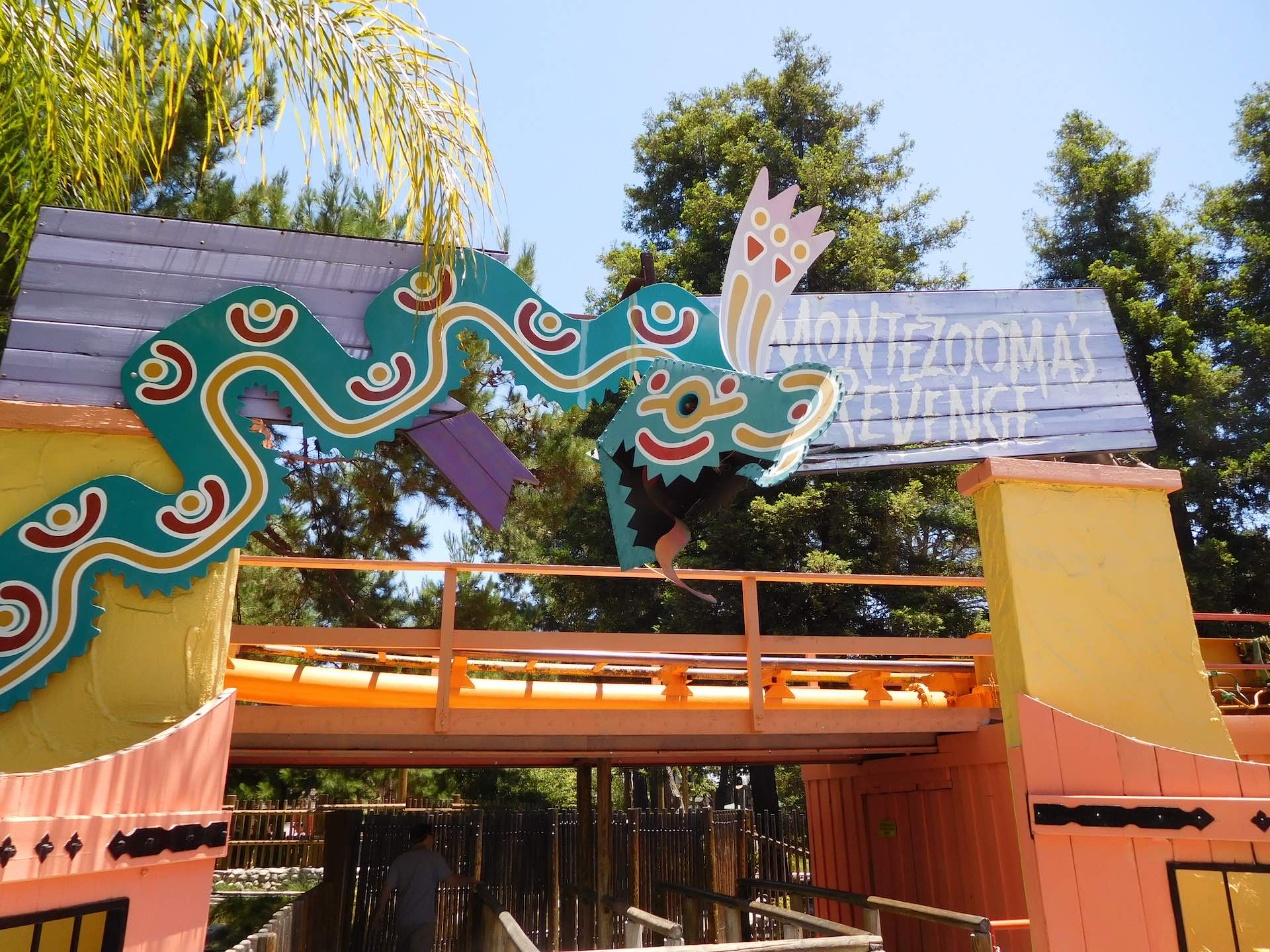
Photo: Dave Hahner. View full-sized image.
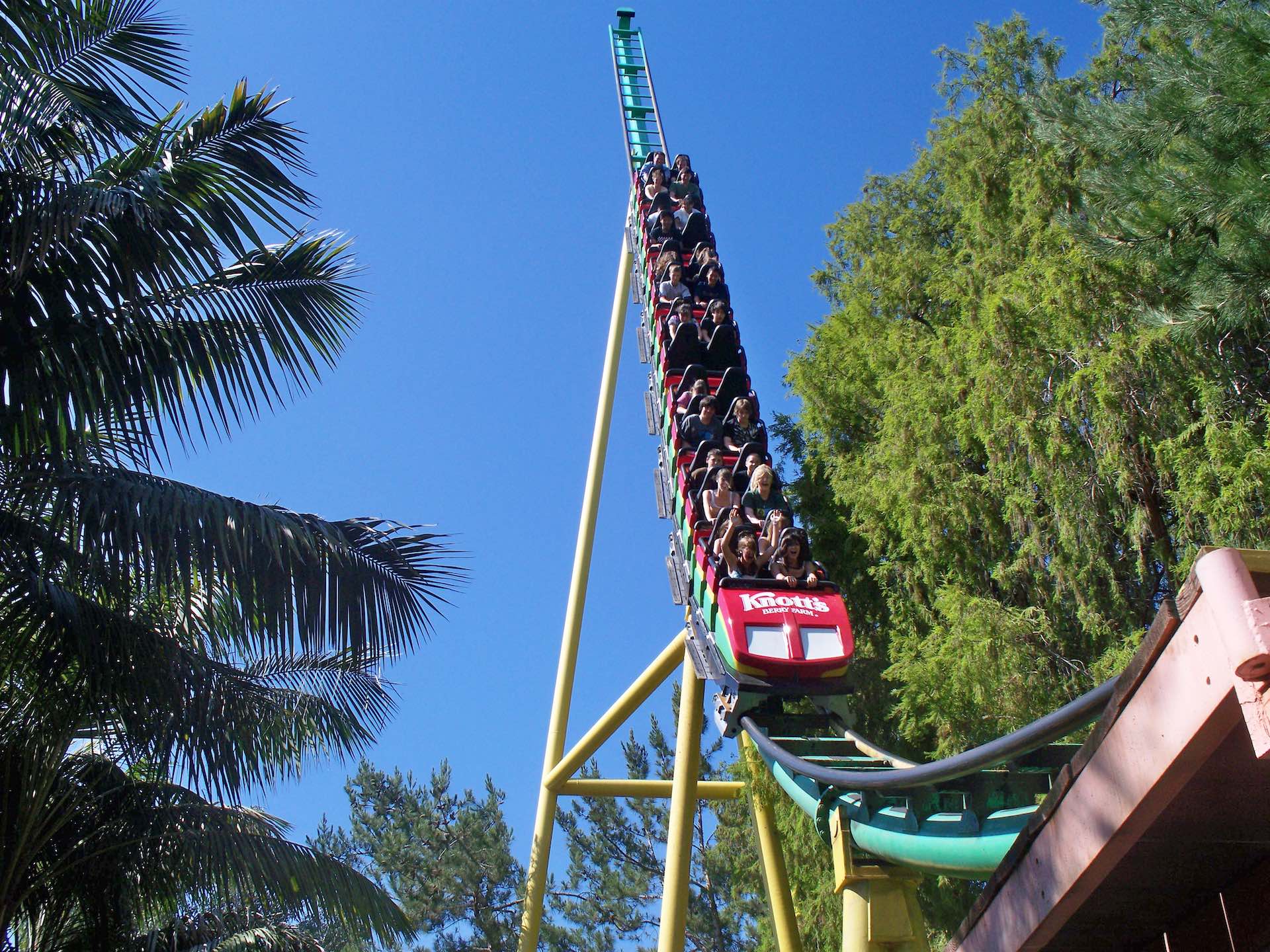
Photo: Adrian Lloyd. View full-sized image.
Knott’s Berry Farm’s version was the second-generation version of this ride system, which featured a large fly-wheel that physically pulled the train slightly faster to reach a top speed of 55 mph in less than five seconds. With a clever play on words for its name, Montezooma’s Revenge opened to the public on May 25, 1978. Several more of these rides were built around the country and overseas, but today, Montezooma’s Revenge is the last of these rides still operating in the United States and is the longest standing in its original location, having never been moved. Several more coasters have been added to Knott’s Berry Farm since, with even one of the newer coaster’s track — Jaguar! — intersecting directly through Montezooma’s Revenge vertical loop, giving passengers on both coasters an added thrill.
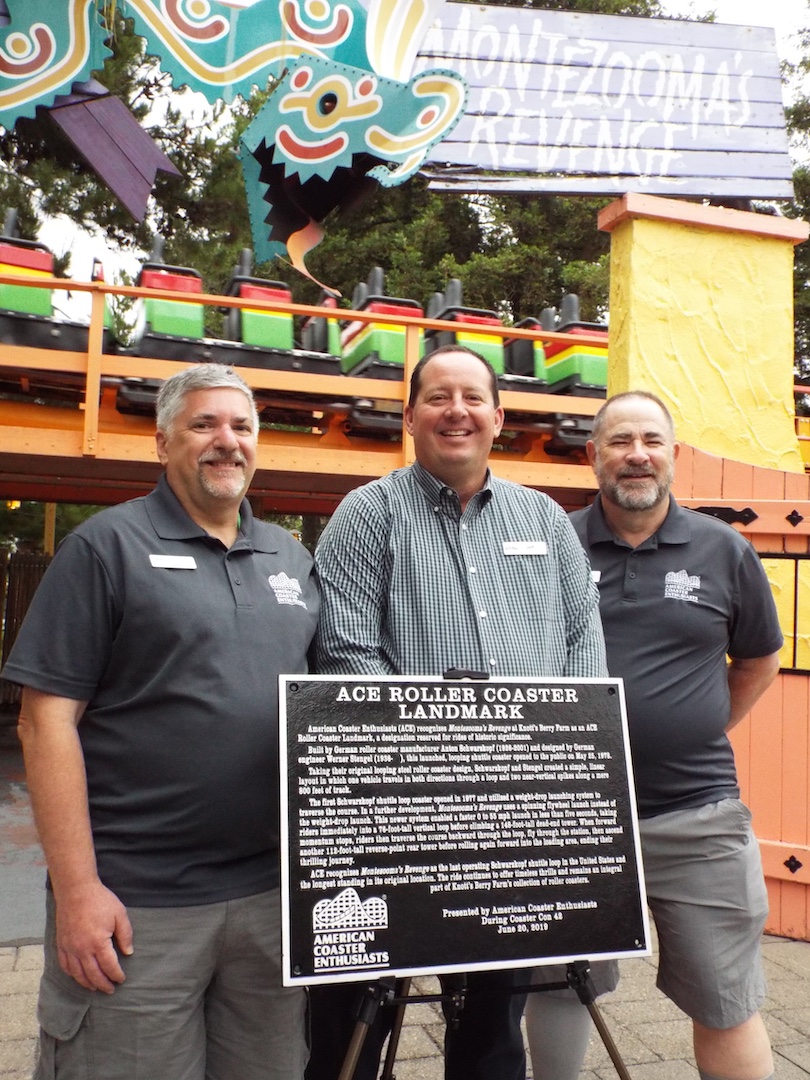
Photo: S. Madonna Horcher. View full-sized image.
Today, Montezooma’s Revenge is the park’s oldest standing coaster. It continues to thrill riders of yet another generation and, it is hoped, will thrill several more generations to come. During Coaster Con 42, co-hosted by Knott’s Berry Farm, American Coaster Enthusiasts designated Montezooma’s Revenge as an ACE Roller Coaster Landmark.
— Dave Hahner
ACE historian
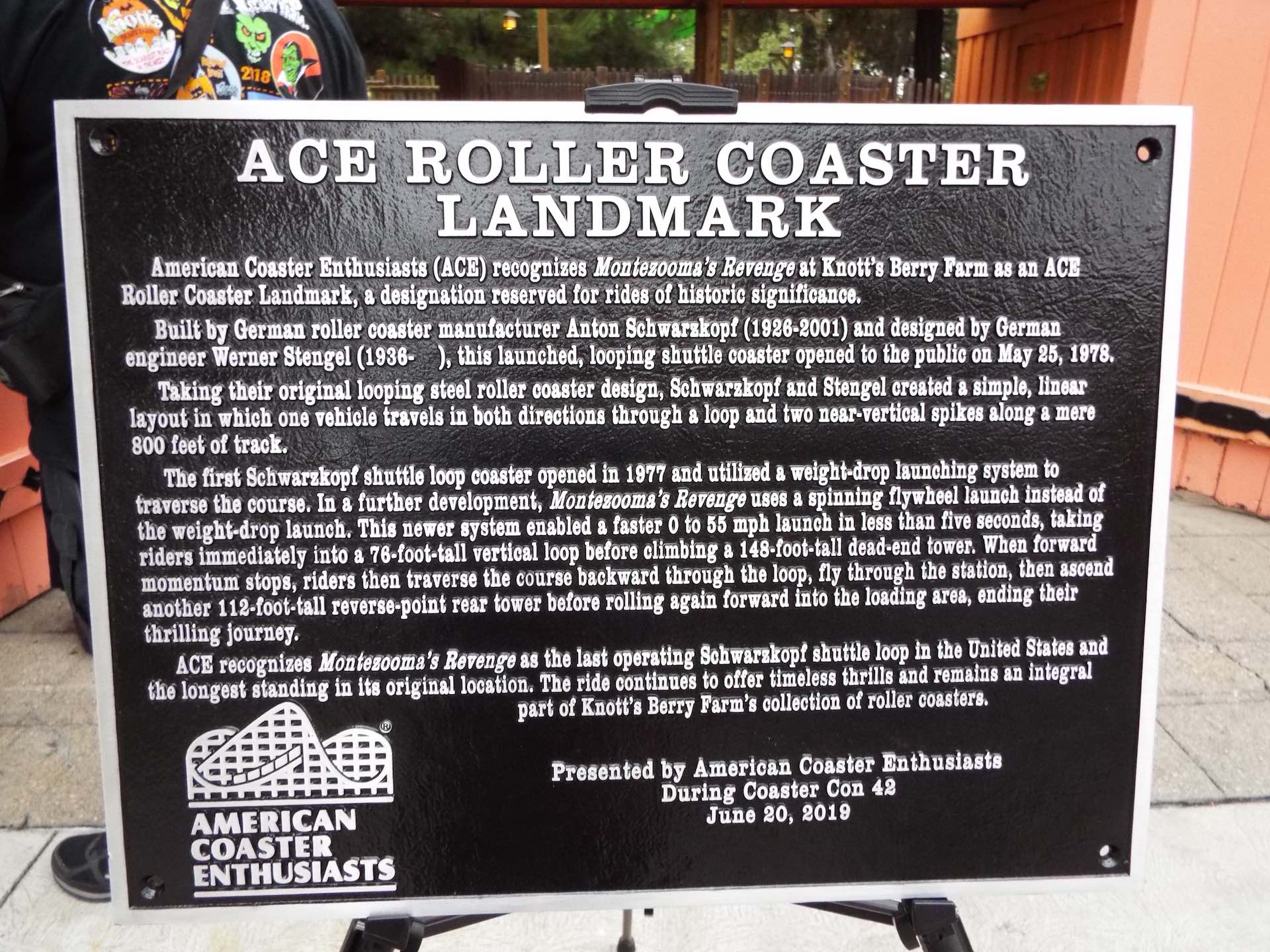
Photo: S. Madonna Horcher. View full-sized image.
@#$%&!
#ACENews