originally posted on 10/12/2022
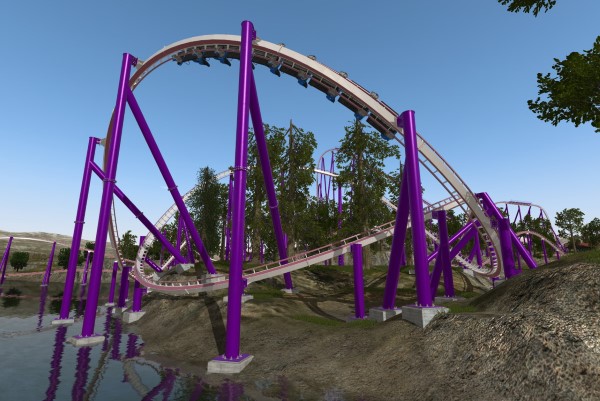
View full-sized image.
Have you ever found yourself staring at a roller coaster and wondering, “How was that thing designed?” Wizardry with math and science has always been involved, as with any engineering project, but thanks to the rise of theme park games and computer-aided design tools, roller coaster design has evolved into an art form. While the programs actually used to engineer real-life thrill machines are kept under lock and key by manufacturers, the next best taste of roller coaster design is NoLimits 2.
In 2001, NoLimits 1, a 3-D roller coaster simulator, was released. With over 20 coaster styles to choose from – along with a sophisticated, first-of-its-kind design system and significant attention to real-life details – NoLimits 1 felt unrestricted compared to the theme park games of the time. Fast forward to 2014, NoLimits 2 debuted with significantly better graphics, a more versatile and powerful interface and even more coaster styles to design with.
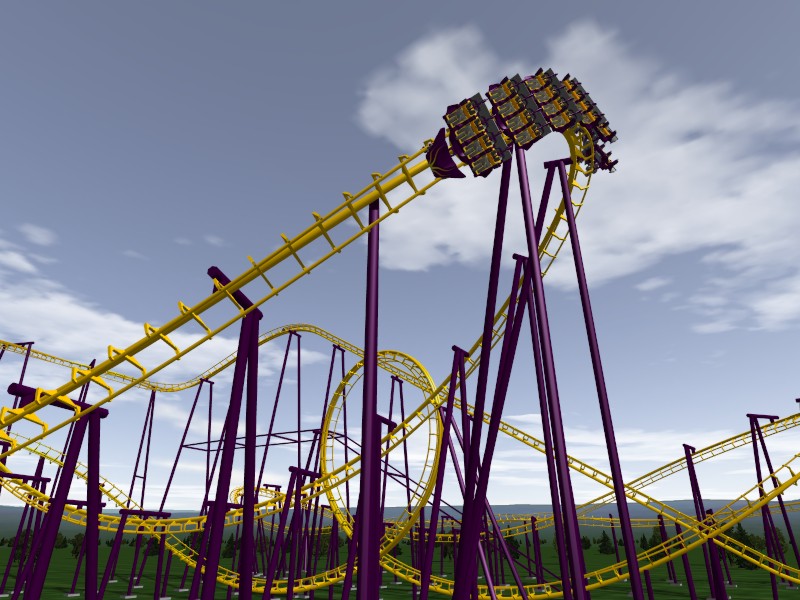
NoLimits 1 Screenshot.
View full-sized image.
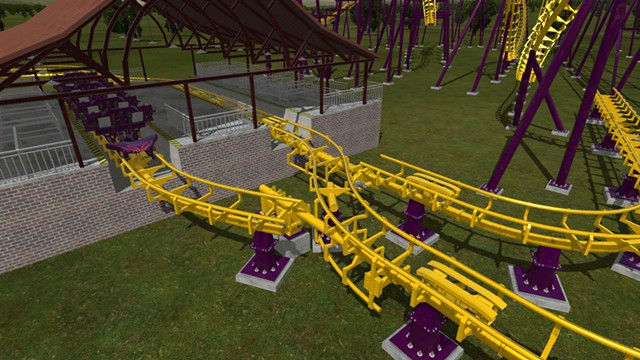
NoLimits 2 Screenshot – see the differences?
View full-sized image.
Popular theme park games today include “Roller Coaster Tycoon,” “Planet Coaster” and Roblox’s “Theme Park Simulator.” In these games, players must manage their parks – build new rides, hire new staff, please park guests and keep finances in order – to fulfill various goals and ultimately win. NoLimits doesn’t have these challenges; instead, its primary purpose is building and simulating roller coasters.
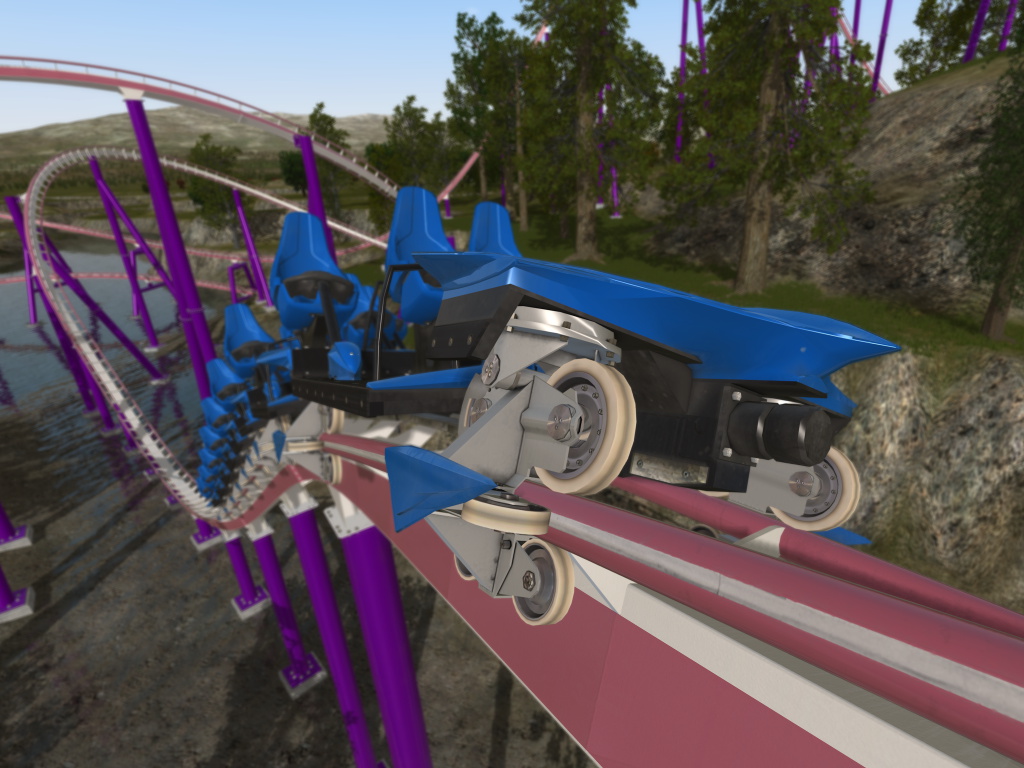
View full-sized image.
On the design side of NoLimits, coaster layouts are made using a spline-based system. A spline is a curve connecting two or more points. In NoLimits, a spline (in yellow) represents the path of the coaster, while each vertex (in blue) is a point that the spline passes through. For adding banks and rolls to the track, roll nodes (in green) are used. Roll nodes tilt the track from 0 degrees (upright), 90 degrees (flipped to the side), 180 degrees (upside down) to anything in between.
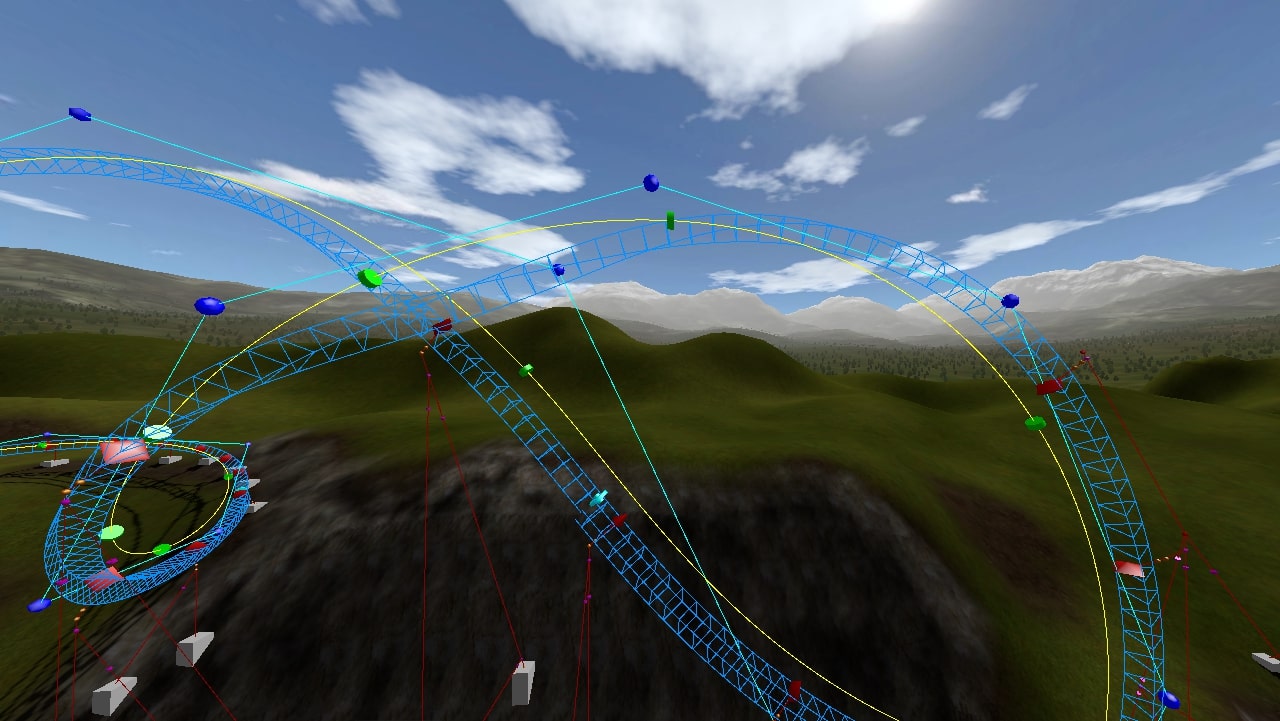
View full-sized image.
In the majority of theme park games, coasters are designed in “segments,” one track piece at a time. Upfront, this is very easy. Elements such as a loop or helix are cookie-cutter, not user made, so they can be added quickly. However, for those looking to kick their coaster layouts up a notch, NoLimits’ spline system is the better option. With enough practice and knowledge in NoLimits 2, designing layouts that are highly twisted and unique – yet immaculately smooth and lifelike – is at users’ fingertips.
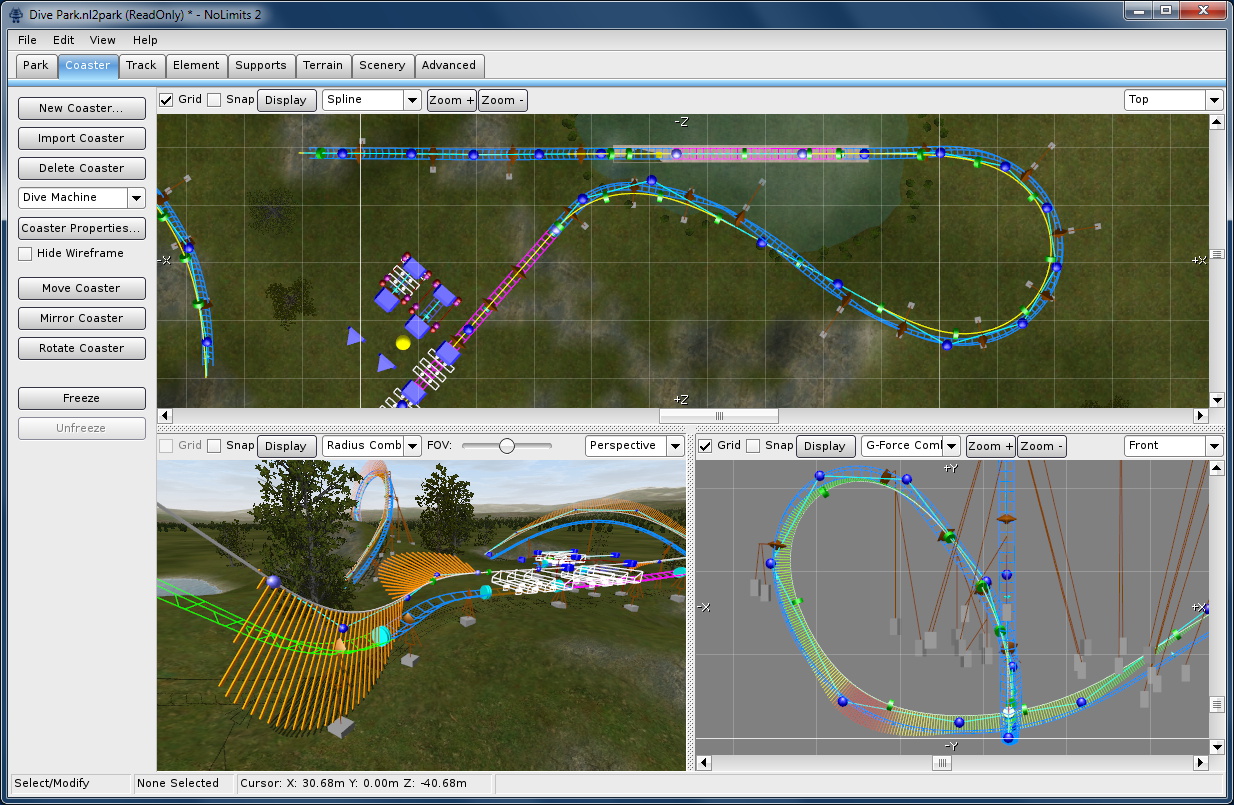
The spline system in action.
View full-sized image.
NoLimits also has basic scenery such as trees, rocks and some flat rides, and custom scenery can be imported from modeling programs, namely, SketchUp or Blender. These options fuel users to create beautiful environments for their coasters, from simple nature and terrain to Disney-style immersive theming.
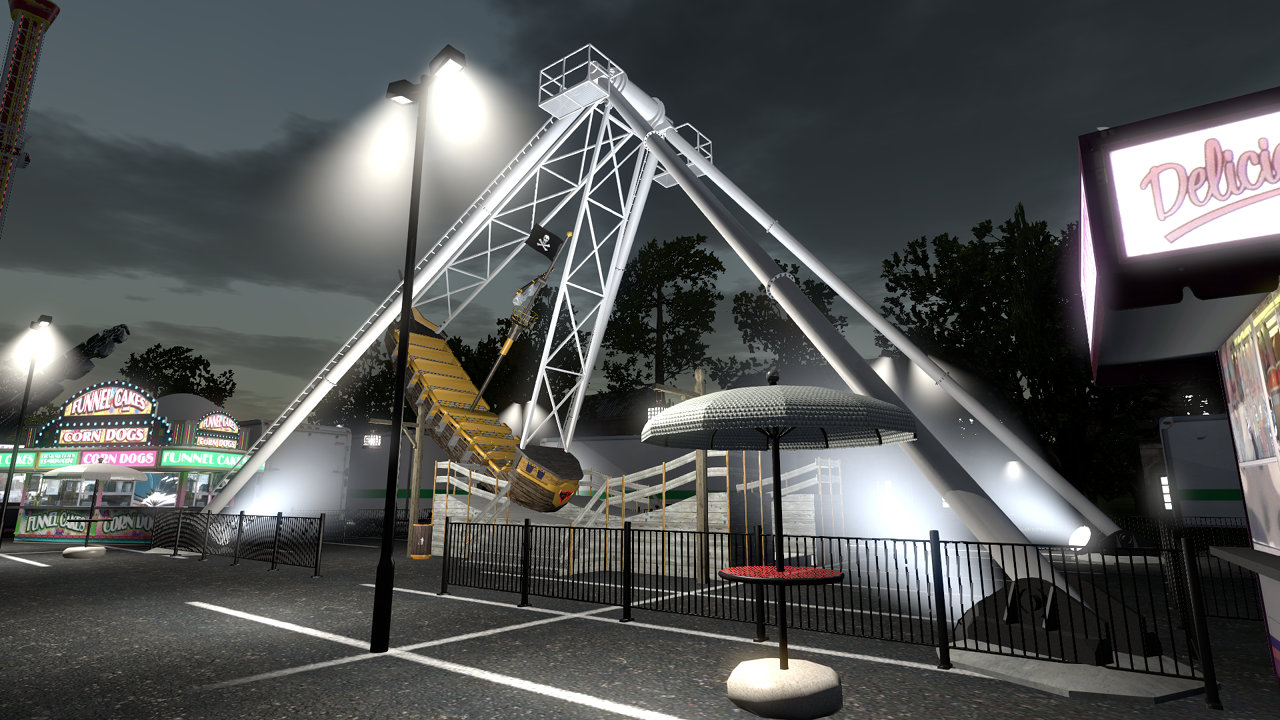
View full-sized image.
All these capabilities make NoLimits 2 the top pick for many hobbyists in coaster and themed design, but even the professionals use it too!
Although it’s most commonly a creative tool, NoLimits software is also used by theme parks and ride manufacturers. In NoLimits 2, prospective customers can virtually “ride” an upcoming (or potential) attraction before it even begins construction.
Since its release in 2001, theme parks have showcased upcoming attractions in NoLimits. Recent examples include Fun Spot Atlanta’s Arie Force One, Fårup Sommerland’s Fønix and COTAland’s Palindrome. NoLimits 2 provides a quality, succinct and more available alternative to the rendering programs used by large chains, such as Six Flags, for promoting their future rides.
Similarly, ride manufacturers present new ride concepts and project proposals in NoLimits. When theme parks begin planning for an upcoming coaster, they ask multiple ride manufacturers to send in project proposals. A manufacturer’s proposal represents the company’s ideas for said coaster, working within criteria such as available land, budget, statistics and special features. NoLimits provides a quick, simple and effective way to present these proposals. However, outside of proposals and new ride concepts, NoLimits isn’t directly used in coaster engineering. Instead, that design work is done with top-secret, company-exclusive software.
Video: Project proposals for Dutch theme park Slagharen.
Over the years, the NoLimits 2 community has produced plenty of fantastic works. From virtual replicas of real-life attractions to predictions for upcoming roller coasters, massive-scale fantasy parks and everything in between, the bounds of NoLimits’ coaster-designing capabilities are, well, limitless. Many of these can be found on YouTube; the NoLimits Roundups is a weekly playlist series of new NoLimits 2 videos.
https://www.youtube.com/c/NolimitsCoasterUTube/playlists?view=1&sort=dd&shelf_id=0
Interested in learning more about NoLimits 2? Here’s the official website: https://www.nolimitscoaster.com/index.php.
– Kohl Gribble
#ACE360