originally posted on 5/12/2025
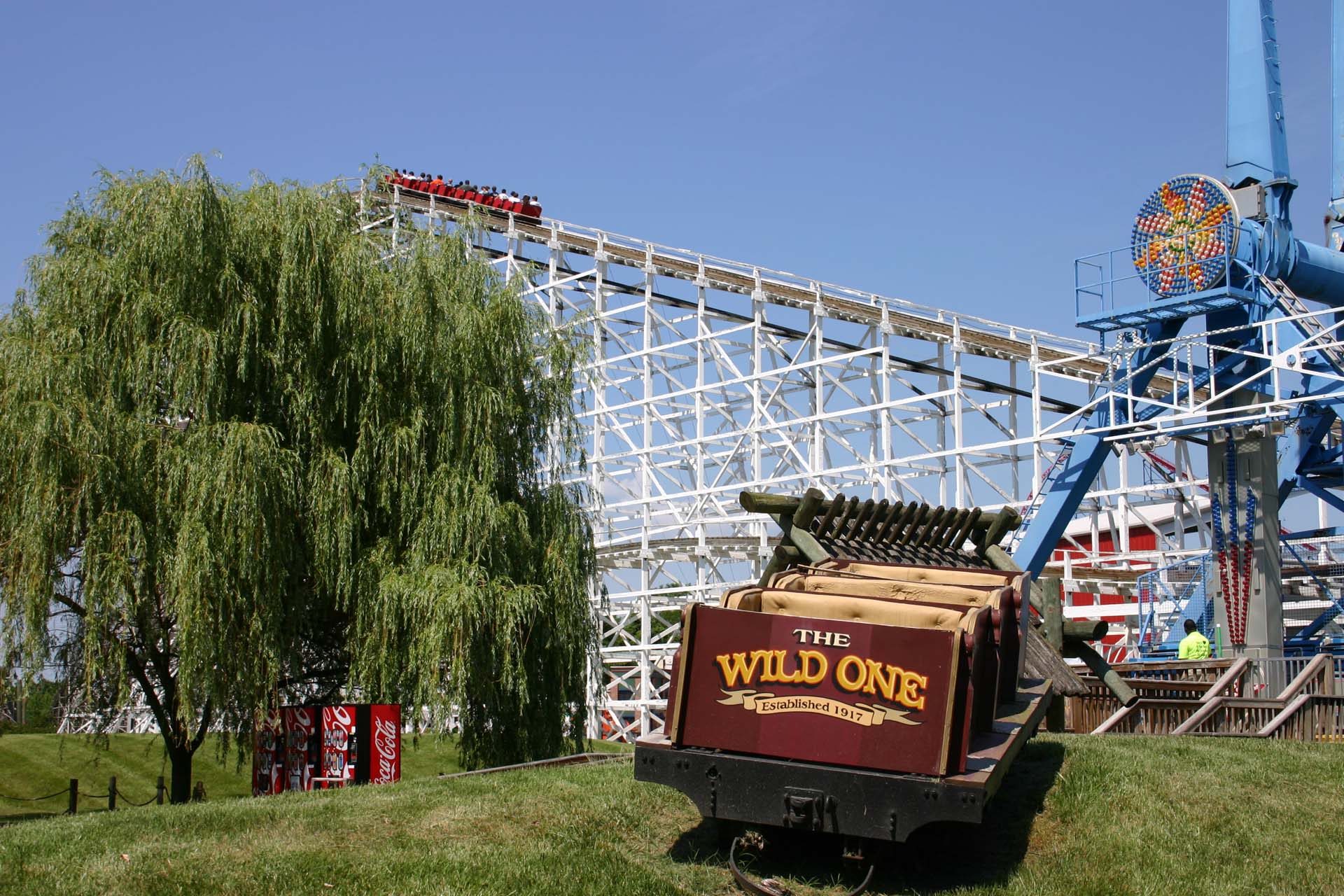
Photo: B. Derek Shaw. View full-sized image.
On May 1, 2025, Six Flags Entertainment Corporation announced that Six Flags America, in Upper Marlboro, Maryland, would close permanently on November 2, ending a 52-season run across multiple corporate ownerships.
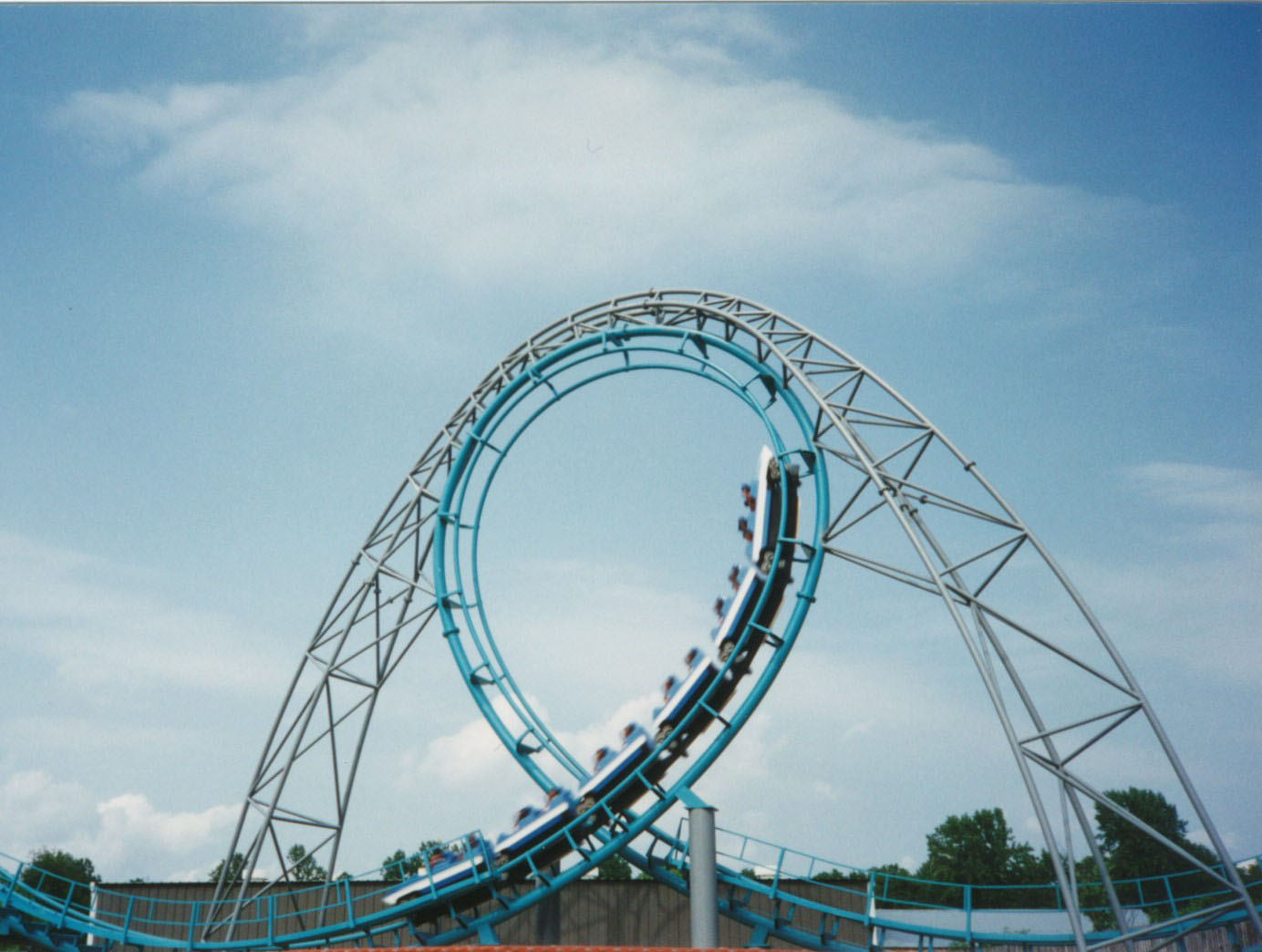
As Adventure World, the park was home to rides like Python — half of Lightning Loops from Six Flags Great Adventure in Jackson, New Jersey and Two-Face: The Flip Side.
Photo: Bob Nagy. View full-sized image.
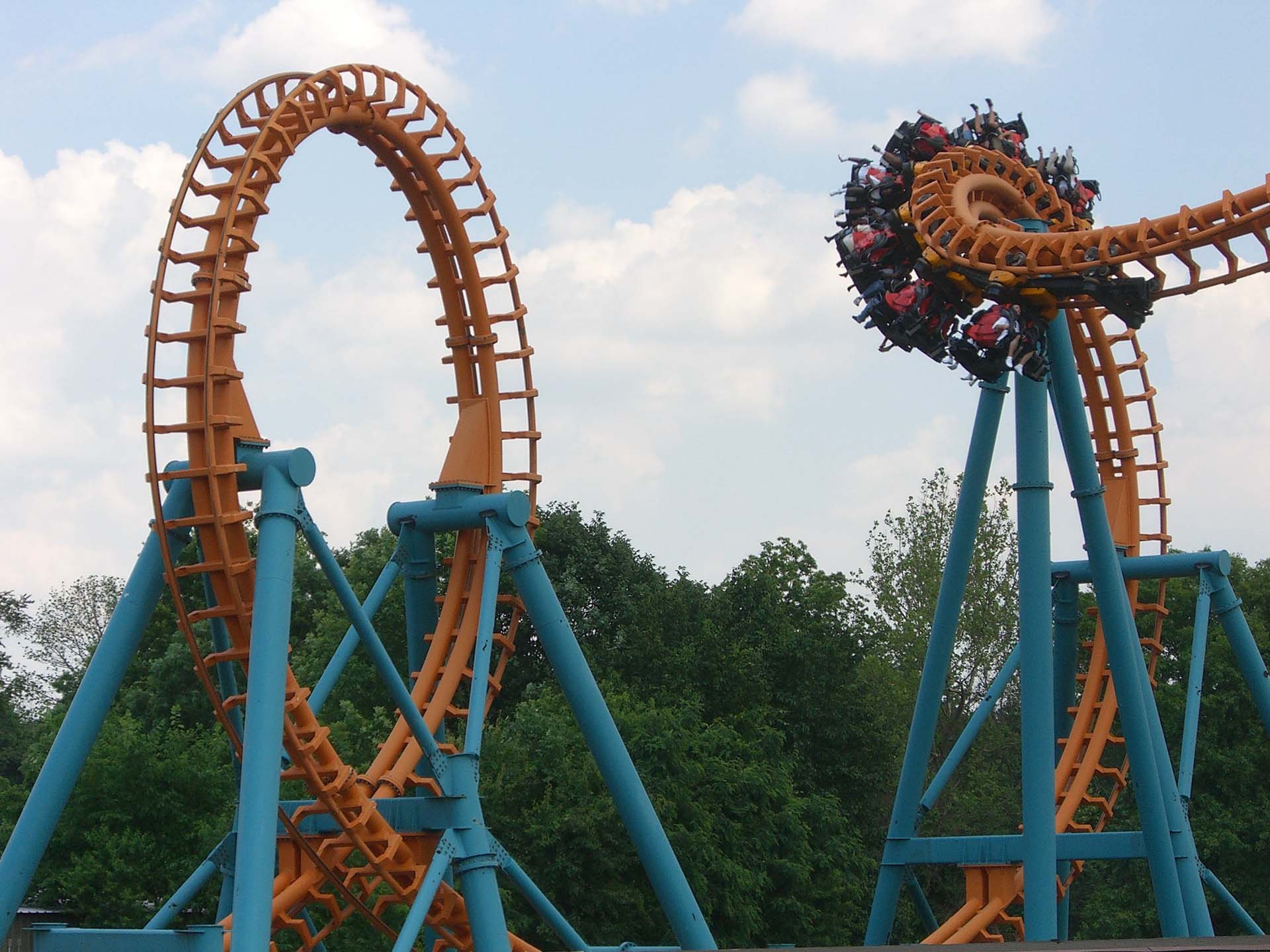
Photo: Mark Rosenzweig. View full-sized image.
The park started life in 1974 as a wildlife drivethrough attraction called The Largo Wildlife Preserve. Across the 80s, the park went through a metamorphosis into an amusement park and was rebranded Wild World. In 1992, it was purchased by Premier Parks and renamed Adventure World.
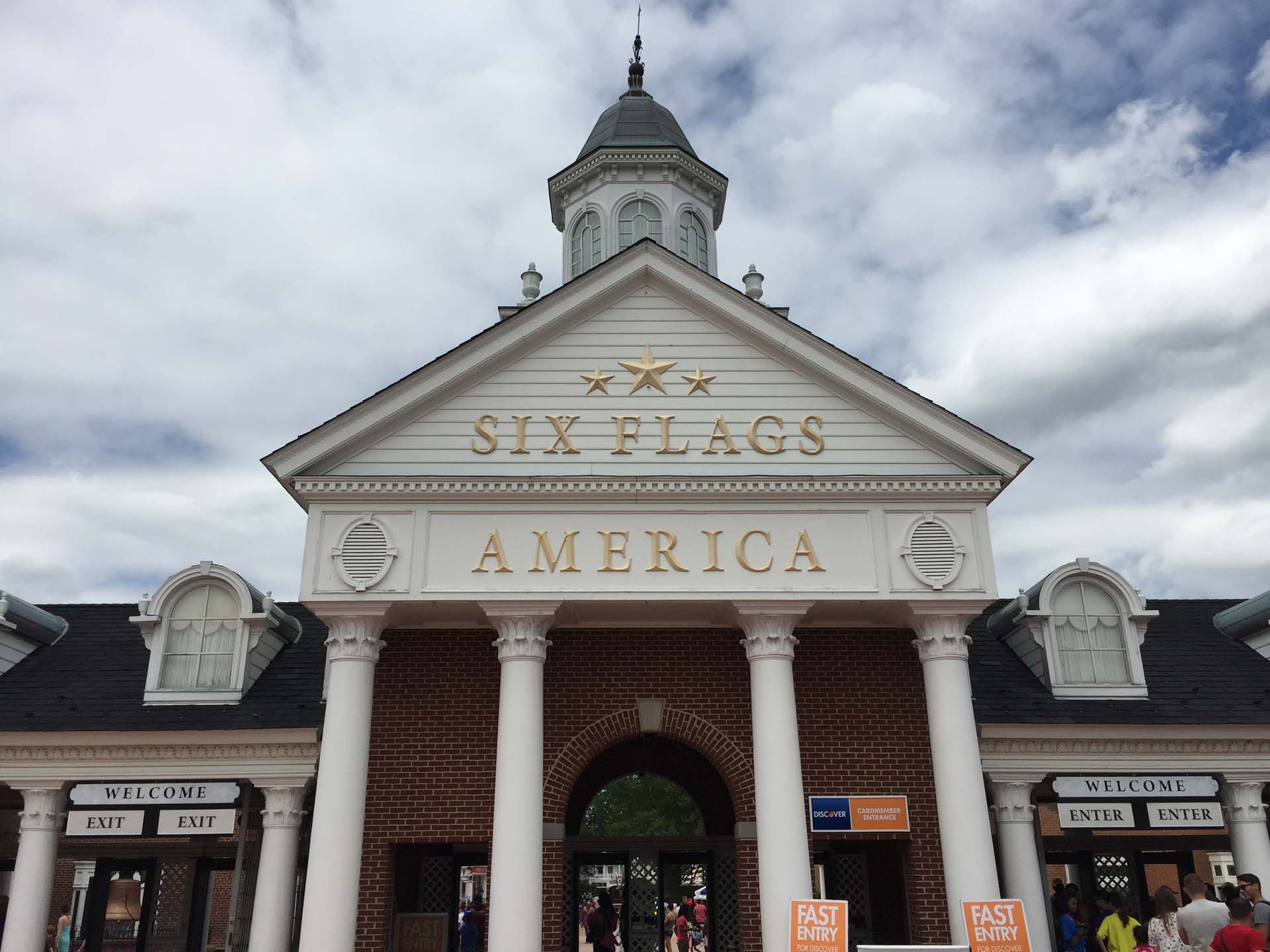
SFA entrance. Following numerous name changes and expansions, the park was rebranded Six Flags America for the 1999 season.
Photo: Krista Keyes. View full-sized image.
When Premier Parks bought the Six Flags name, this park became the 10th Six Flags park and was eventually renamed Six Flags America in 1999 to celebrate America’s colonial architecture and heritage.
The park features several rides with storied histories, so hopefully a new amusement park company will buy the park, or Six Flags may choose to relocate some of the rides.
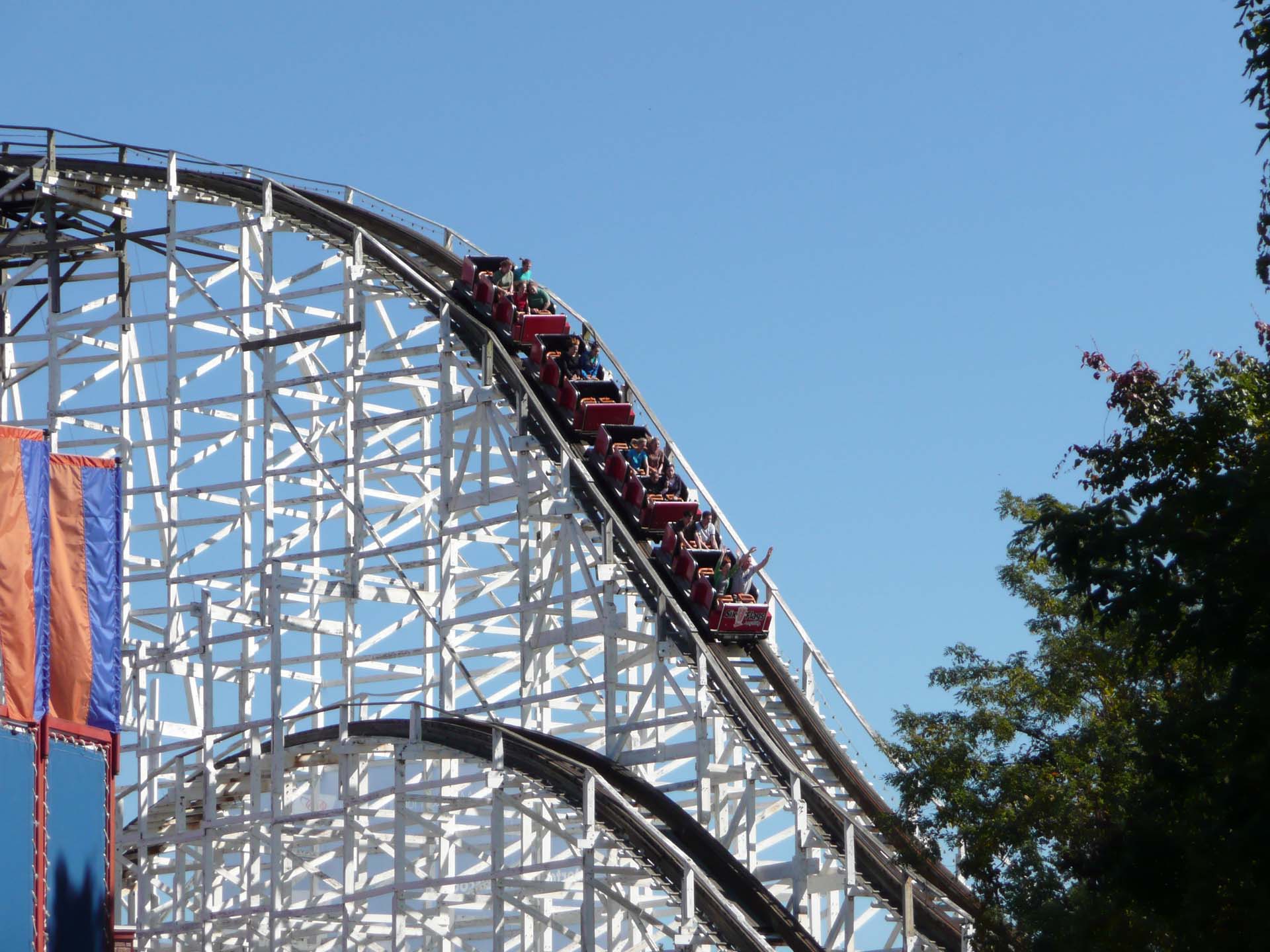
One of the oldest roller coasters operating in the world, the loss of The Wild One will be a brutal one for coaster enthusiasts as well as anyone with a healthy respect for history.
Photo: Richard Koppelman. View full-sized image.
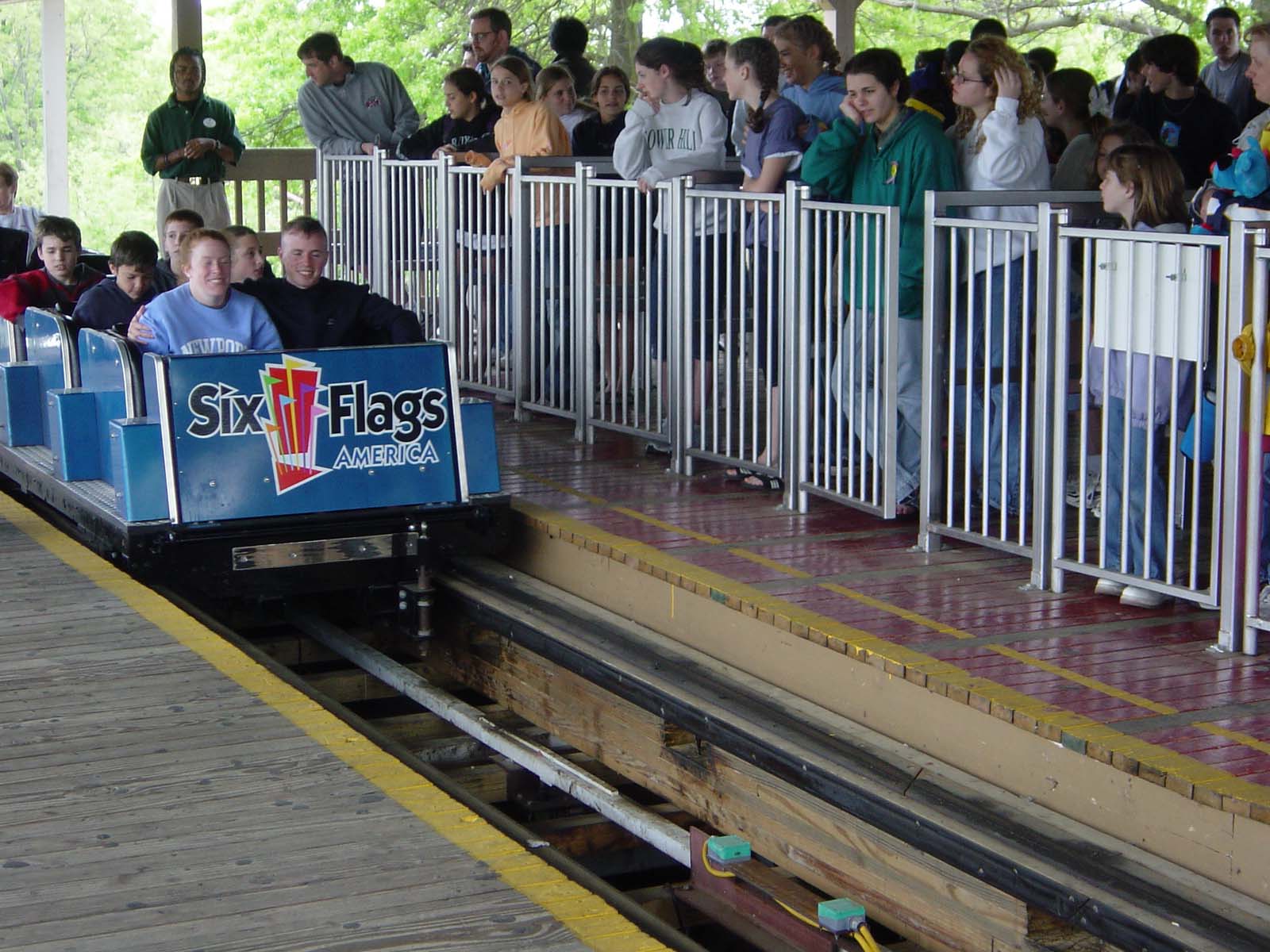
Photo: Elizabeth Ringas. View full-sized image.
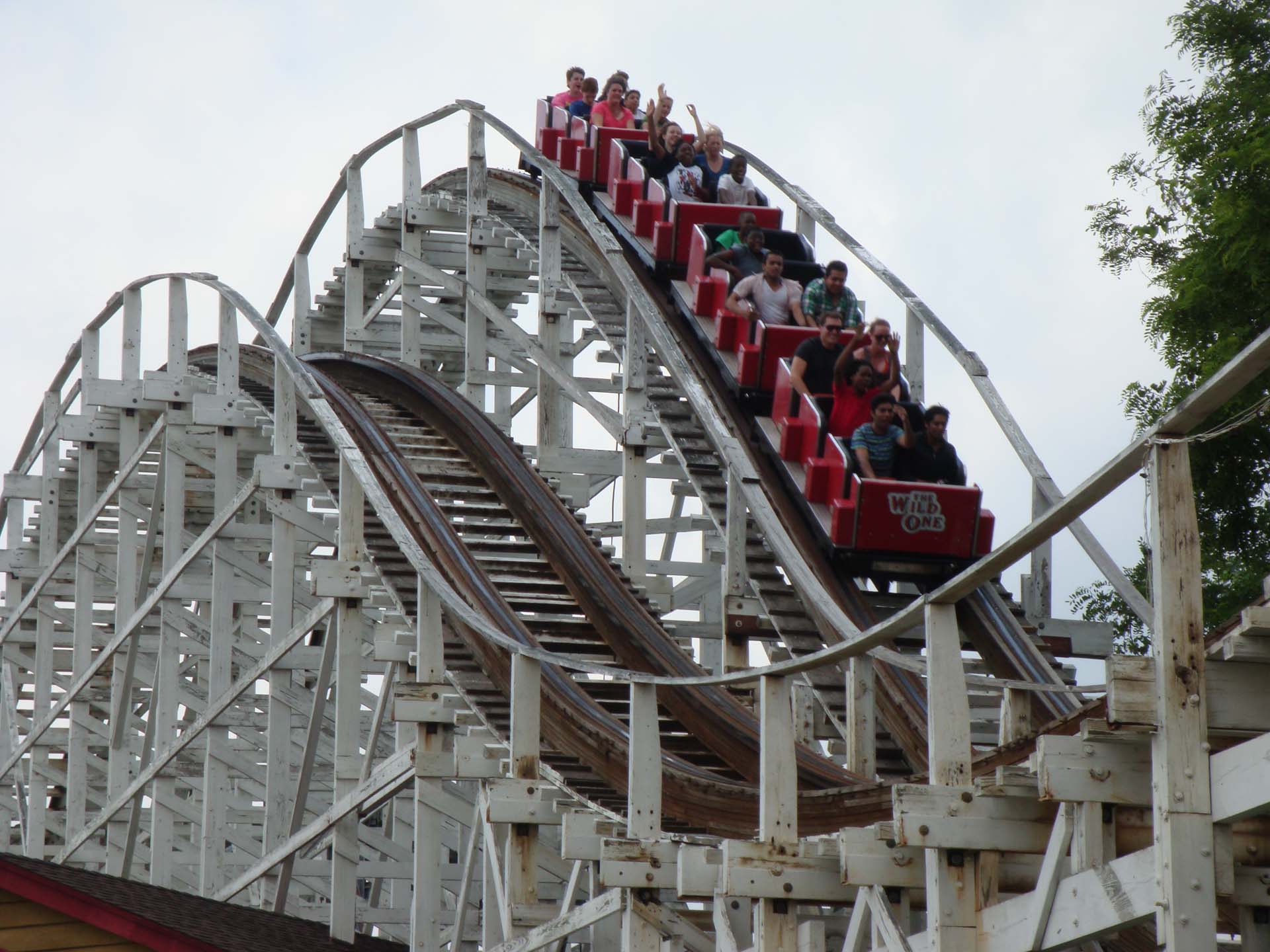
Photo: Torrence Jenkins. View full-sized image.
Among the notable rides include The Wild One, a Dinn Corporation wooden coaster that is not only the oldest ride in the park, but also the oldest ride in the entire Six Flags chain (1917). This ride has already been relocated once from its original home (at defunct Paragon Park in Massachusetts, where it was named Giant Coaster), so perhaps it will be fortunate enough to find another home. In 2017, The Wild One celebrated its 100th birthday, and ACE has already received emails from dedicated fans (including at least one couple who got married on the coaster) to try and set in motion a plan to save The Wild One for future generations.
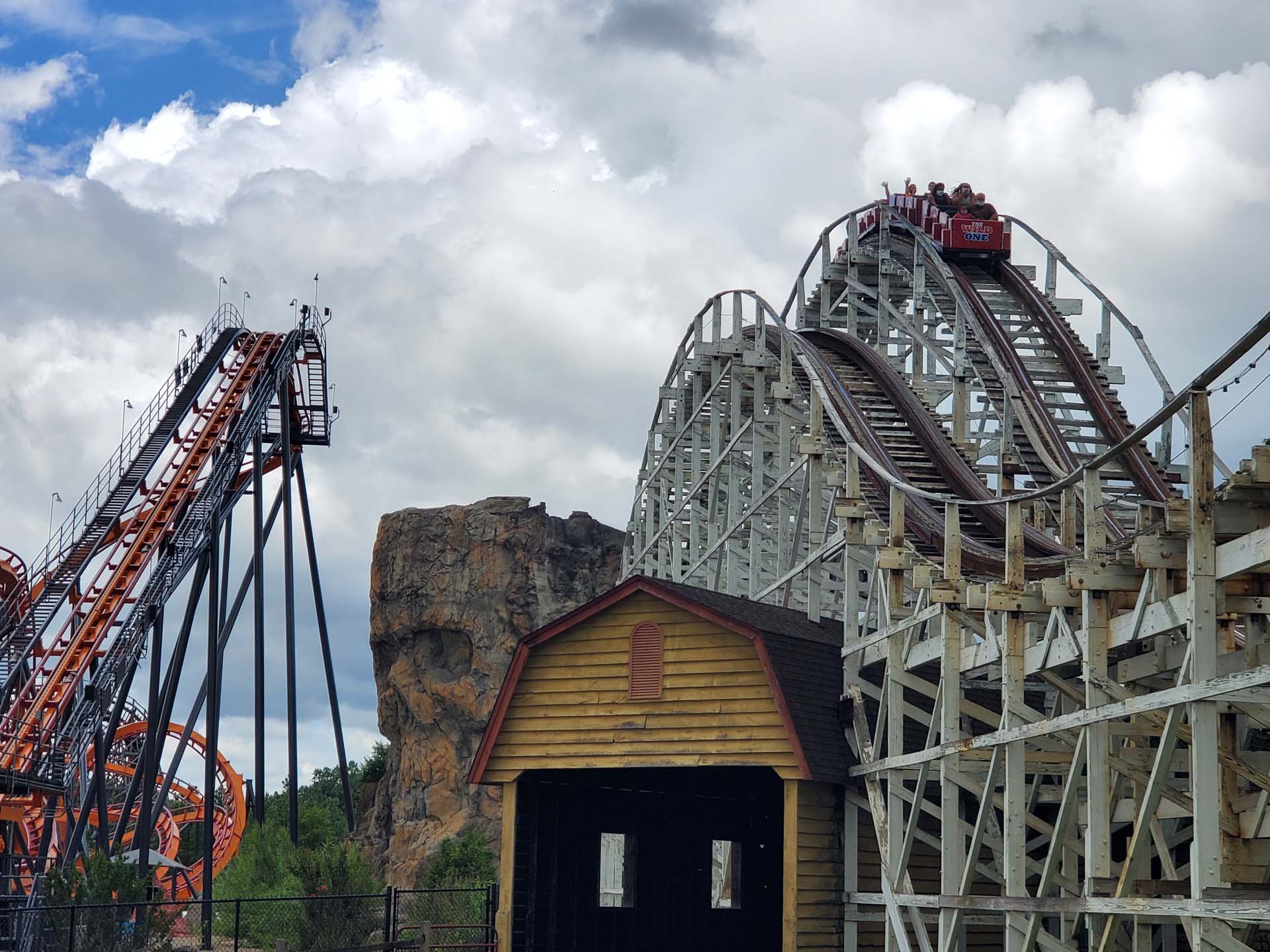
One of the park’s newest roller coasters — Firebird — operates steps away from its oldest, The Wild One.
Photo: Rob Ascough. View full-sized image.
The park also has a second wooden coaster, Roar, which was originally part of a set of twin coasters. The other Roar was at Six Flags Discovery Kingdom in Vallejo, California, and now operates as The Joker after a conversion by Rocky Mountain Construction.
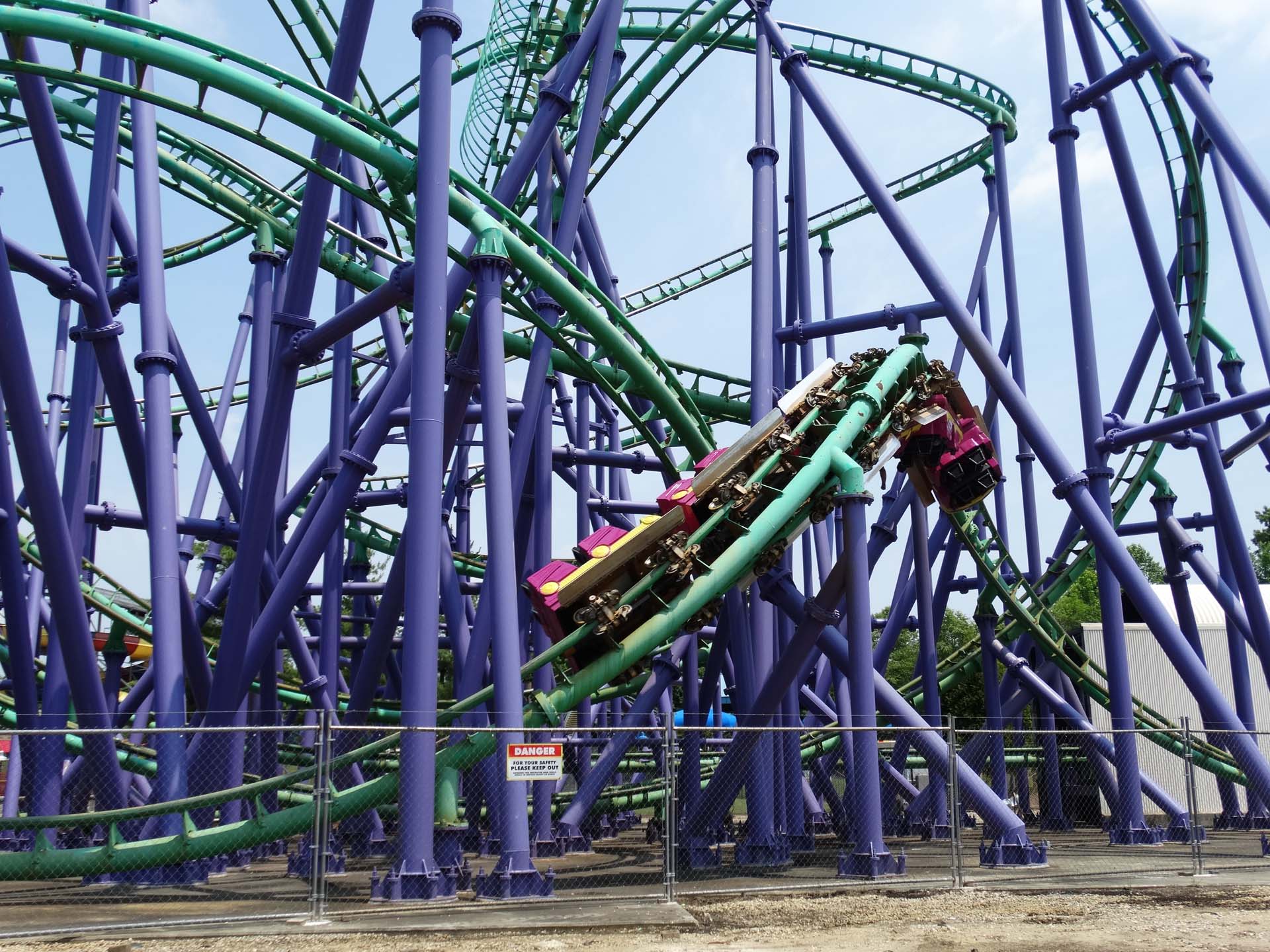
Joker’s Jinx and Roar are two coasters that will close along with the park.
Photo: Tim Baldwin. View full-sized image.
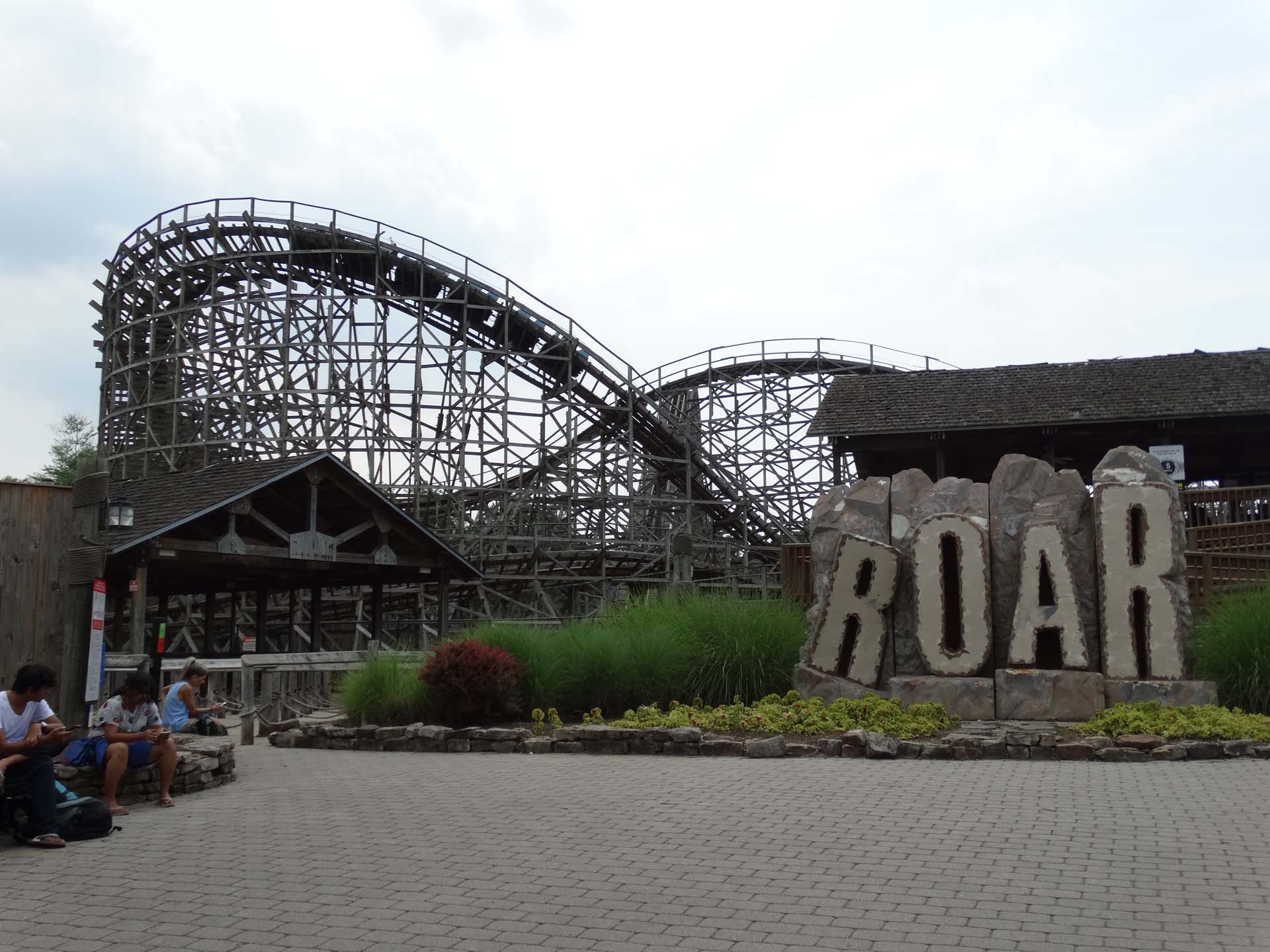
Photo: Tim Baldwin. View full-sized image.
On the topic of The Joker, the DC villain actually inspired a ride at Six Flags America as well: a Premier Rides spaghetti bowl launch coaster, called Joker’s Jinx, that is effectively a clone of the Flight of Fear rides at Kings Island (Mason, Ohio) and Kings Dominion (Doswell, Virginia) as well as Poltergeist at Six Flags Fiesta Texas (San Antonio).
The first Vekoma suspended looping coaster to be called “Mind Eraser” is also at the park, although for the 2024 and 2025 seasons it has operated as Professor Screammore’s SkyWinder. This was part of a retheme of the region around the coaster, which became ScreamTown for the last two seasons of operation.
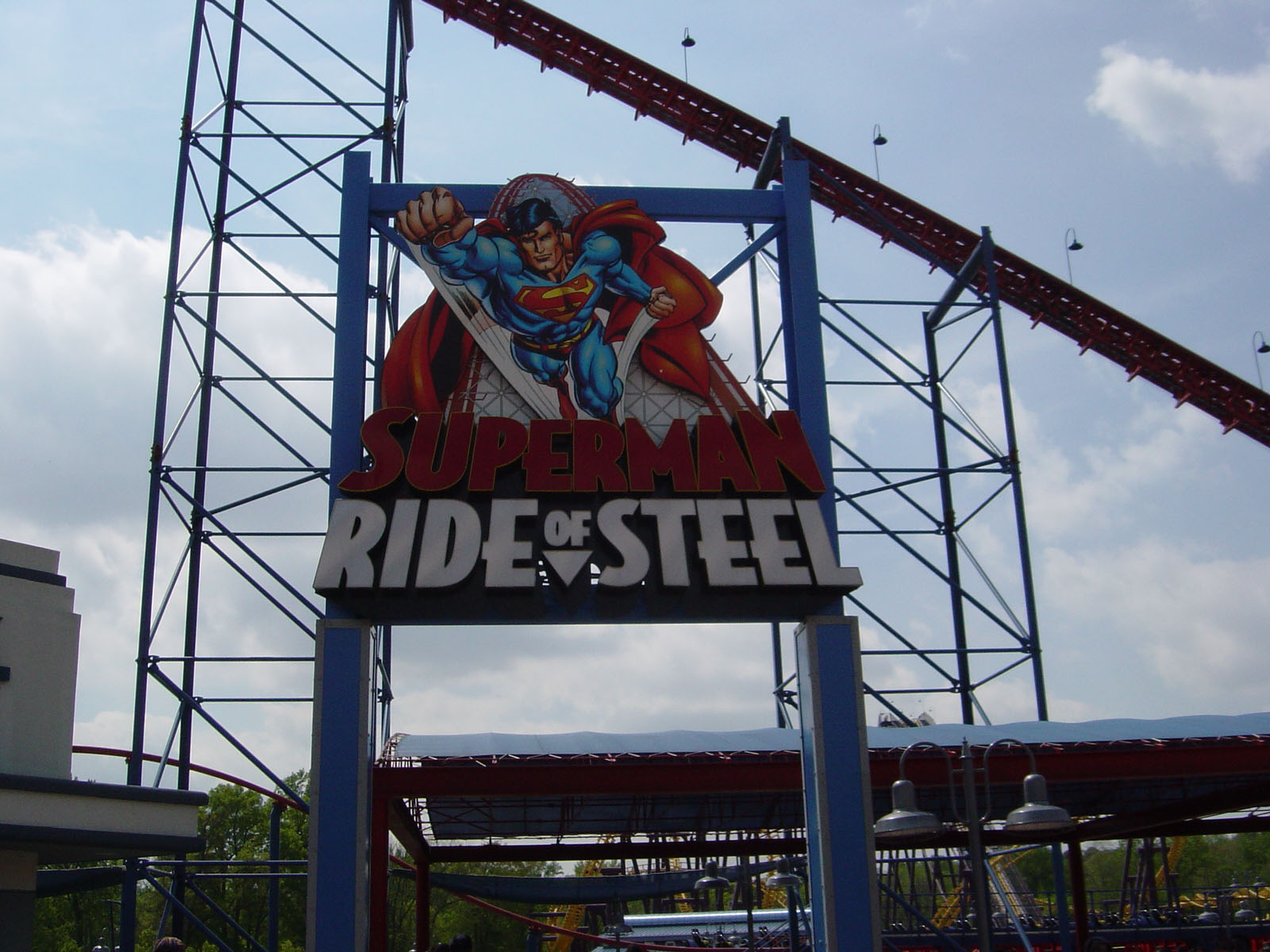
Six Flags America’s flagship roller coaster is Superman: Ride of Steel — a mirror image clone of 1999’s Ride of Steel at Six Flags Darien Lake.
Photo: Elizabeth Ringas. View full-sized image.
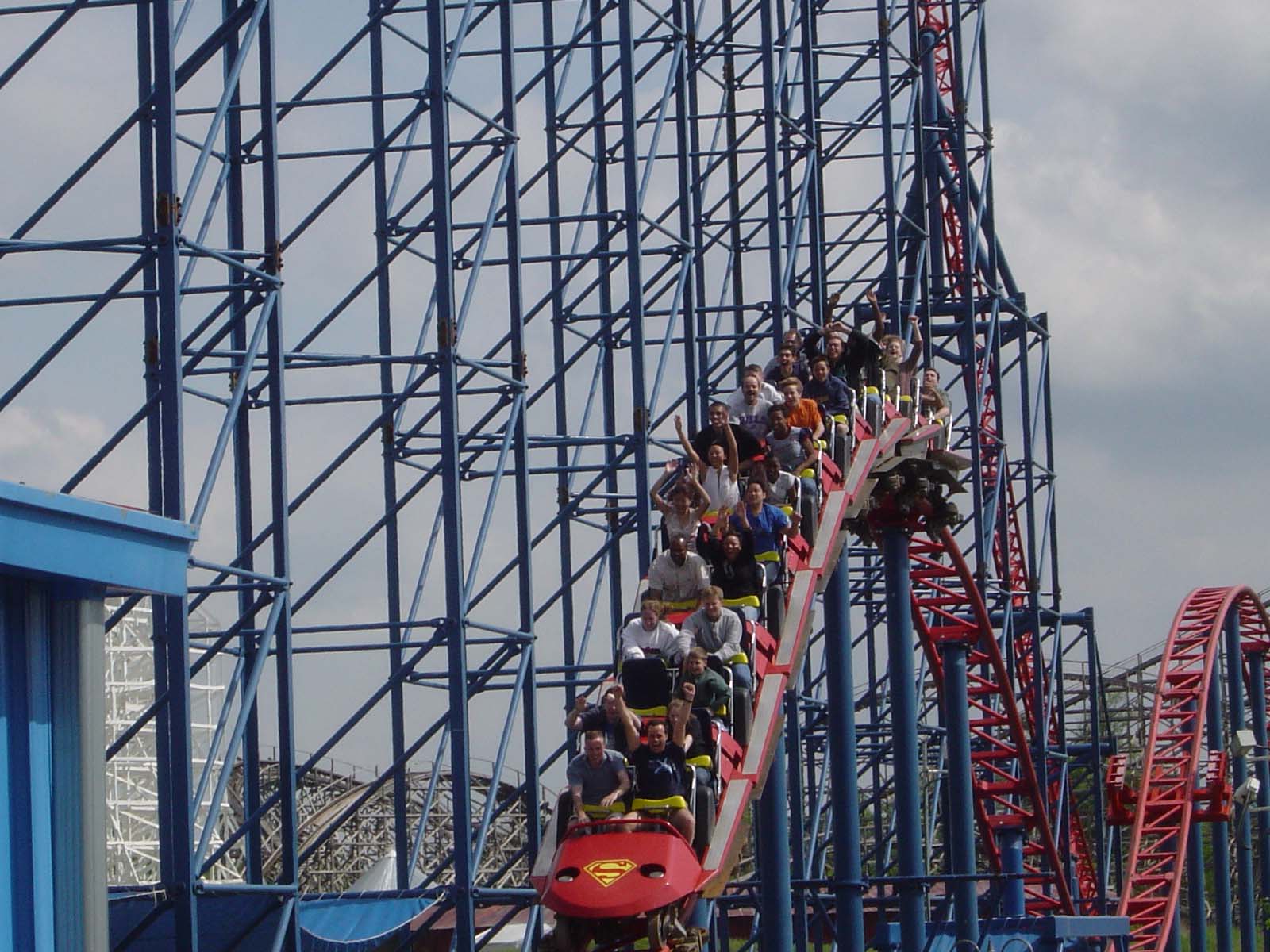
Photo: Elizabeth Ringas. View full-sized image.
One of the most notable scream machines at the park is Superman: Ride of Steel, which is a mirror image clone of Ride of Steel at Six Flags Darien Lake (Darien Center, New York). The coaster is often talked about online for both its excellent forces and the sections of straight track that may seem odd to a casual observer until you realize that the Darien Lake version has those straight tracks over bodies of water (to simulate Superman flying at high speed over water).
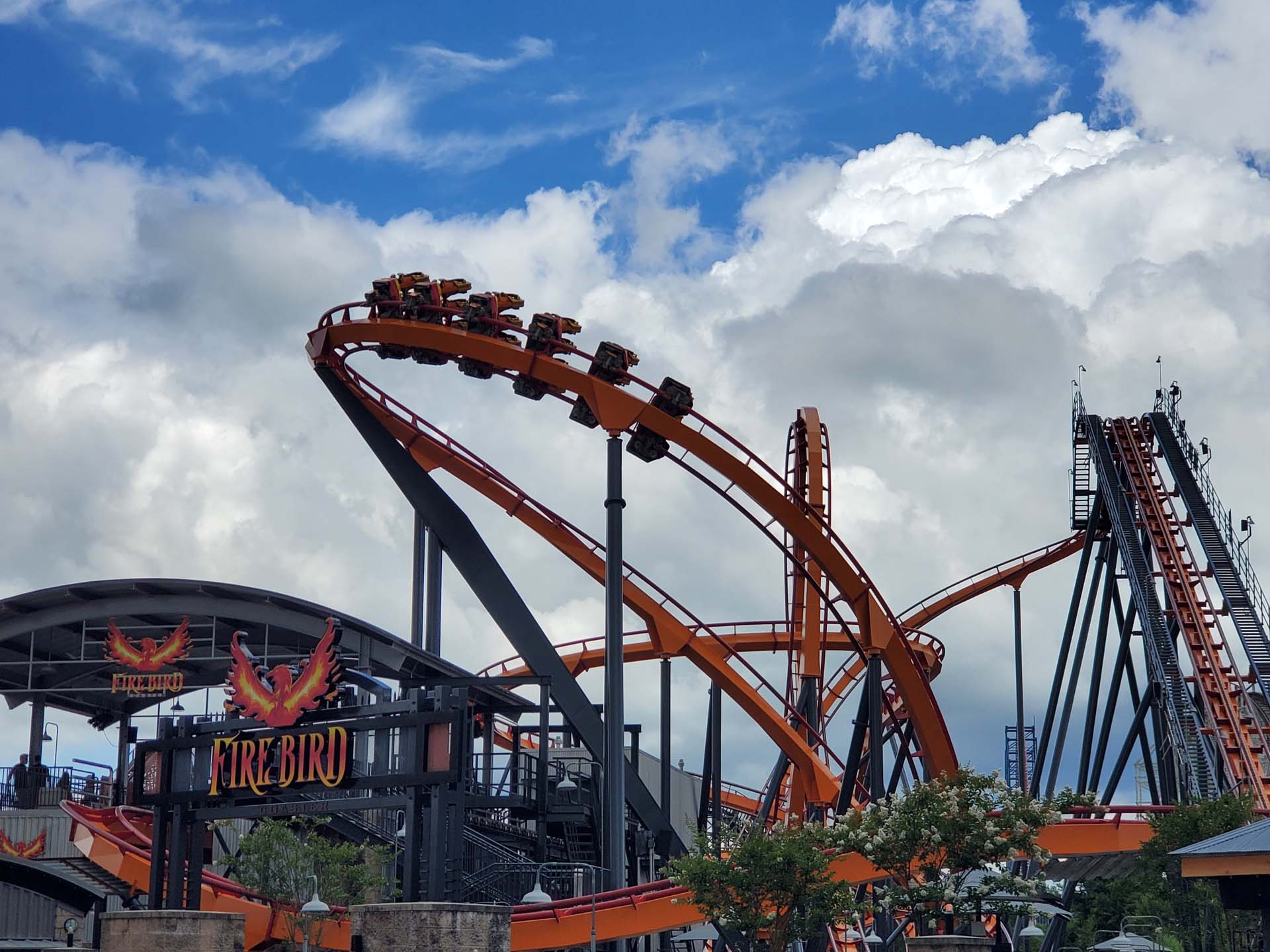
Firebird first appeared at the park as Apocalypse: The Last Stand, starting life as Iron Wolf — B&M’s first roller coaster.
Photo: Rob Ascough. View full-sized image.
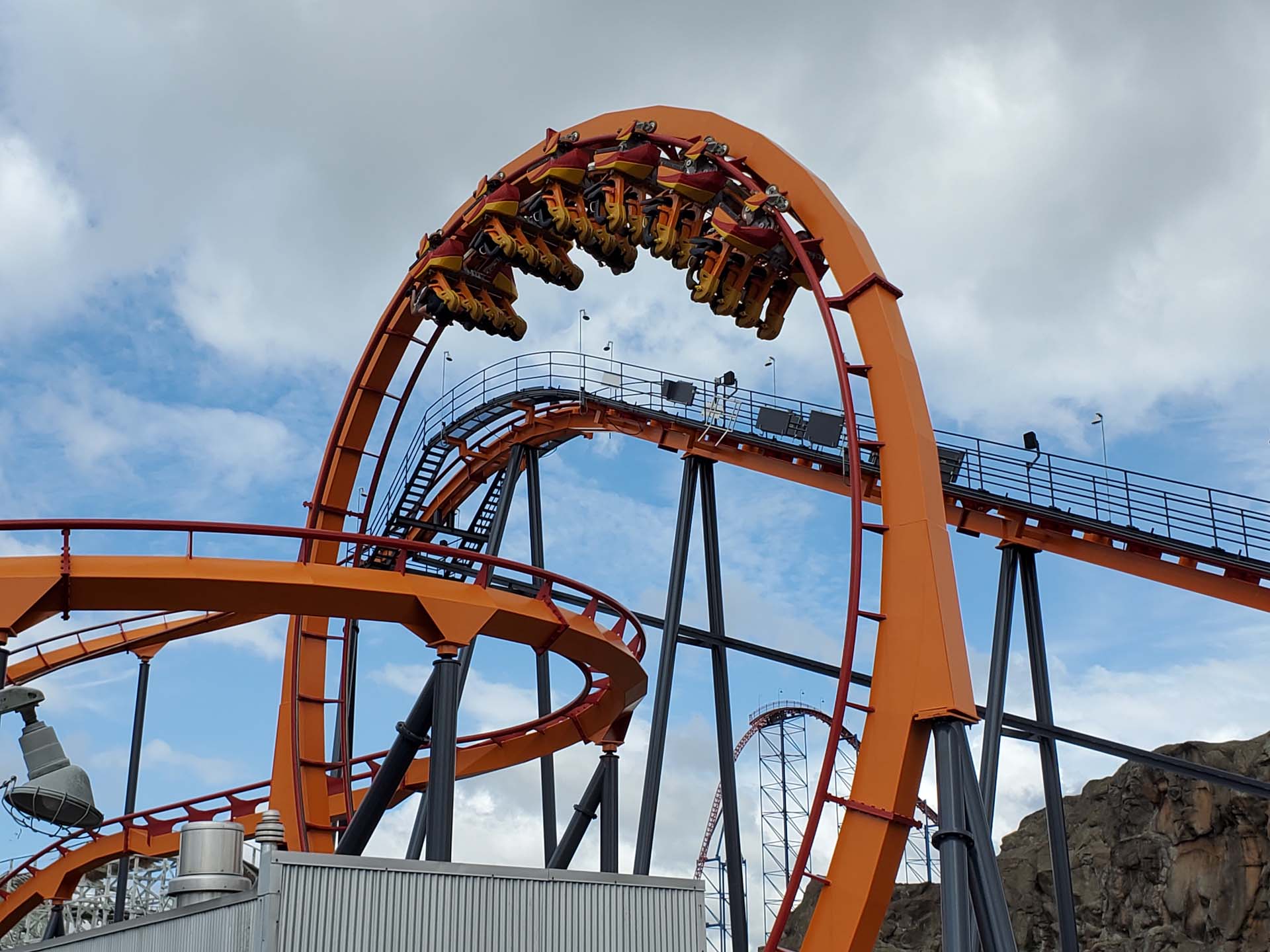
Photo: Rob Ascough. View full-sized image.
Also at the park is a coaster that really should have its own star on the Hollywood Walk of Fame. The ride is the floorless coaster, Firebird, that originally started its life at Gurnee, Illinois’ Six Flags Great America as Iron Wolf. It was the original coaster by legendary Swiss manufacturer Bolliger & Mabillard, not counting some work they did on a few Intamin coasters before going off on their own. Iron Wolf was famously featured in Macaulay Culkin’s 1990’s film “Richie Rich,” in which his parents bought it for him as a gift to ride in his backyard. During its tenure at Six Flags America, Iron Wolf still retained its stand-up trains and operated as Apocalypse: The Last Stand until 2018, when it was converted into the floorless Firebird and got a new paint job.
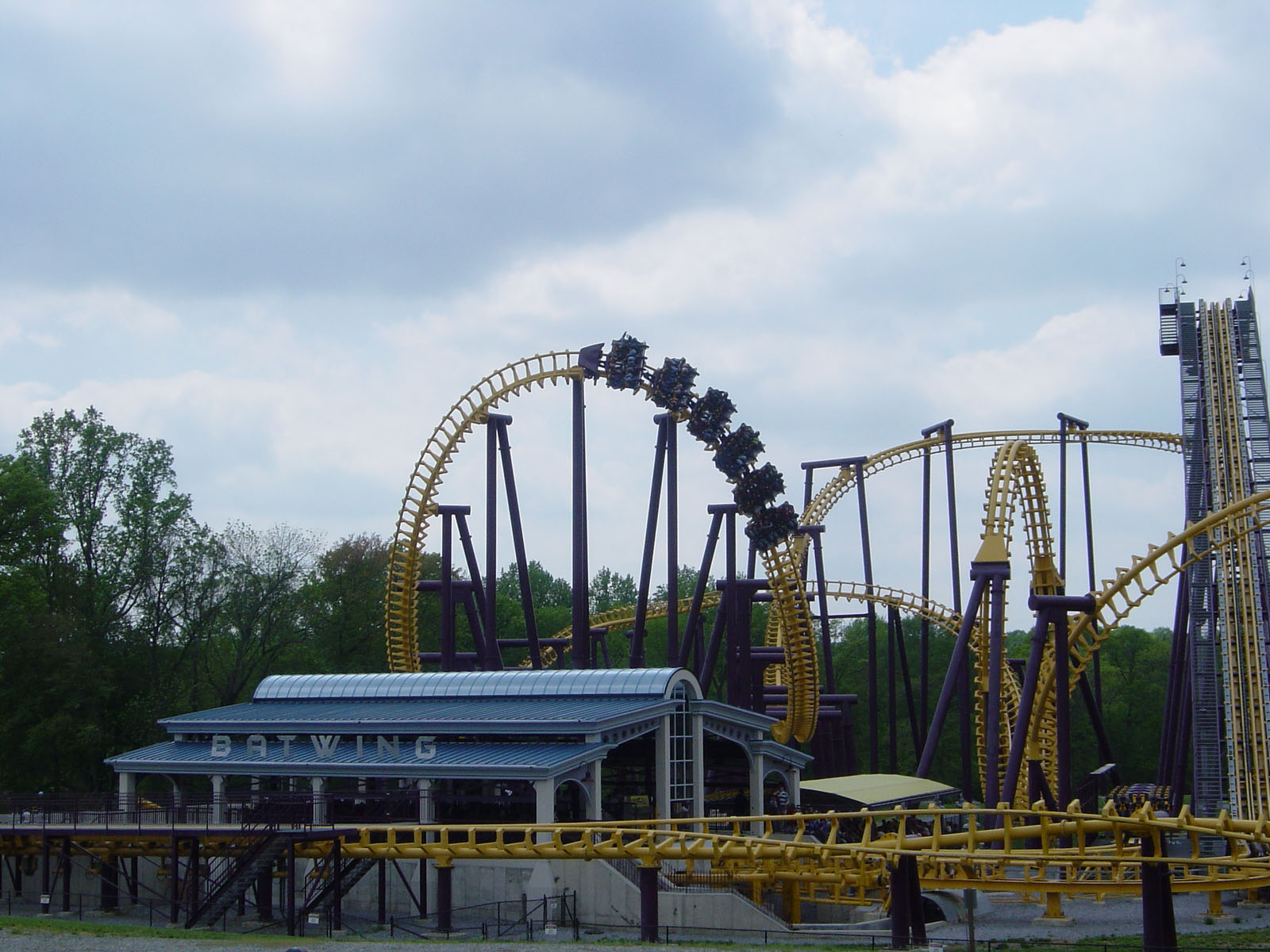
Following the closures of Firehawk and Nighthawk, Batwing is the last surviving example of a Vekoma Flying Dutchman.
Photo: Elizabeth Ringas. View full-sized image.
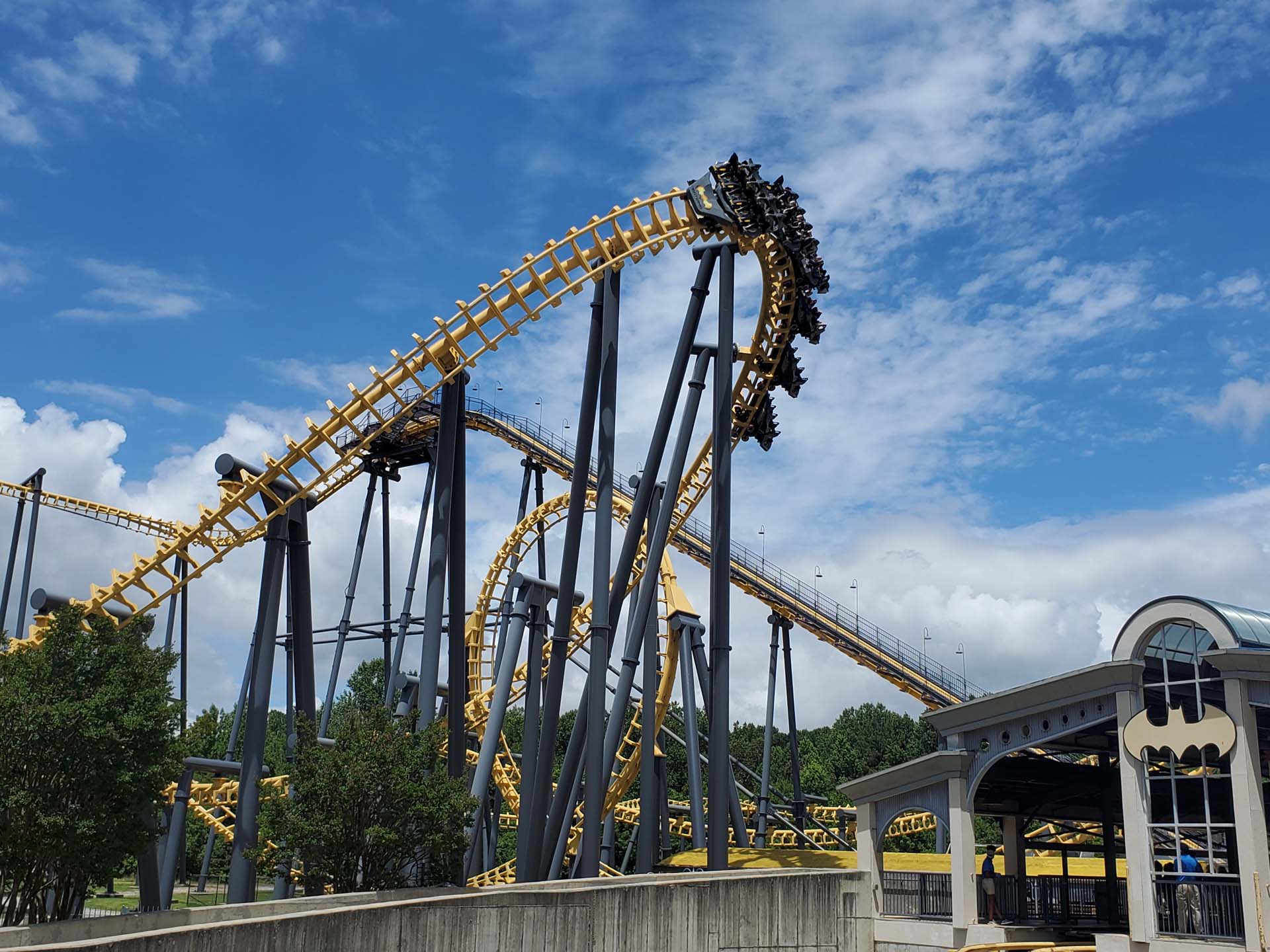
Photo: Rob Ascough. View full-sized image.
Another exceedingly rare coaster at the park is Batwing, the last Vekoma Flying Dutchman. Only three such coasters were built: Stealth at California’s Great America (Santa Clara), which later relocated to Carowinds (Charlotte, North Carolina) and operated as Nighthawk until it was demolished in 2024; Firehawk at Kings Island, which closed in 2018; and Batwing. While technically not the first-ever flying coaster (the UK had a smaller-scale prototype flying coaster that held one rider at a time), Stealth and its brethren were the first large-scale flying coasters that could actually handle trains with multiple people in them. In recent years, these coasters have somewhat become social media stars because of their unique boarding process during which riders board facing backward, and then each row of trains lays down onto the track to get riders in a flying position facing the sky. Vekoma still makes flying-style coasters (and currently has only one operating, F.L.Y. at Phantasialand in Brühl, Germany), but they have a very different loading process now as well as different seat arrangements, so Batwing is both truly the last of its kind and also not likely to be relocated owing to the recent demise of its two siblings.
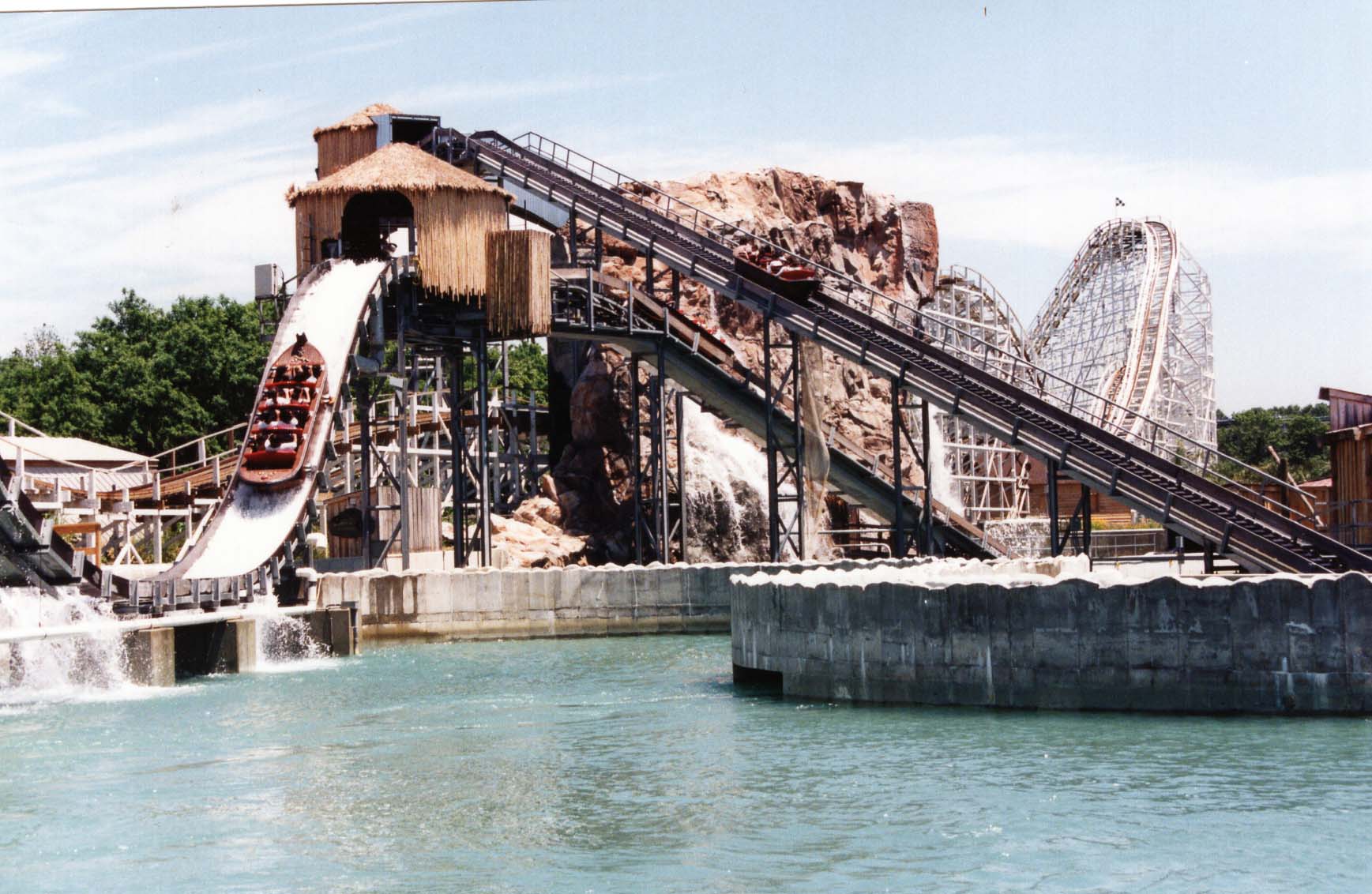
Throughout the years, the park has been home to everything from production model coasters to the unique Typhoon Sea Coaster.
Photo: Gary Slade. View full-sized image.
Also at the park is a Crazy Mouse coaster built by Zamperla and Reverchon. Because of the portability of this coaster (it was originally designed for traveling fun fairs), one can assume that — should a non-amusement park company buy the land — this coaster will have a fairly easy time finding a home at another Six Flags property or getting sold to another park.
The Hurricane Harbor waterpark adjacent to the dry park will also close. Special thanks to both Wikipedia and Rob Ascough, ACE News editor, for providing information used in this piece. Hope remains that some of the more notable rides find new homes!
— Josh Hughes
#ACENews